Yellow 3240 Epoxy Board: Aerospace Bracket Insulation Engineering Authority
Yellow 3240 Epoxy Board, EPGC201 laminate, aerospace avionics bracket insulation, IEC 60893 standard epoxy glass cloth sheet, lightweight high dielectric insulation material, thermal stable epoxy plat
Description
Section 1: Industry Background + Problem Introduction
The aerospace industry operates under some of the most demanding material performance requirements in modern engineering. Electrical insulation components, particularly mounting brackets and structural supports for avionics systems, face a triple challenge: they must provide absolute dielectric integrity in high-voltage environments, maintain dimensional stability under extreme thermal cycling, and contribute minimal weight to aircraft systems where every gram counts toward fuel efficiency. Traditional insulation materials often force engineers into difficult trade-offs—ceramic insulators offer excellent dielectric properties but add prohibitive weight and brittleness, while standard polymer composites may lack the mechanical rigidity required for load-bearing structural applications.
The 3240 epoxy glass cloth laminate, commonly recognized by its distinctive yellow hue, has emerged as the industrial standard solution for electrical insulation in electromechanical equipment. However, not all 3240 boards deliver equal performance in aerospace applications. The critical differentiator lies in material purity, manufacturing precision, and compliance with international standards. Shenzhen Xiongyihua Plastic Insulation Ltd., a professional integrated manufacturer with deep expertise in high-performance insulation materials since 2006, has established technical authority in producing IEC 60893-compliant EPGC 201 grade 3240 epoxy boards specifically engineered for demanding aerospace bracket applications.
Section 2: Authoritative Analysis: Technical Foundation of 3240 Epoxy Board for Aerospace
The 3240 epoxy glass cloth laminate represents a sophisticated composite architecture. At its core, the material consists of alkali-free E-glass fiberglass cloth—a deliberate selection that eliminates sodium and potassium ions which could migrate under electrical stress and compromise long-term insulation resistance. This E-glass substrate is thoroughly impregnated with high-purity epoxy resin formulated to achieve Thermal Class B rating, enabling continuous operation at temperatures up to 120°C without mechanical or dielectric degradation.
The manufacturing process is critical. The impregnated glass cloth layers are consolidated through hot-pressing under precisely controlled temperature and pressure profiles, followed by thermal curing that cross-links the epoxy matrix into a dense, void-free composite. This process achieves two essential outcomes for aerospace brackets: exceptionally high dielectric strength that prevents electrical arcing across mounting interfaces, and superior compressive strength that allows the material to replace traditional metal brackets while maintaining structural load-bearing capacity.
For aerospace applications, the adherence to IEC 60893 (EPGC 201) standard is non-negotiable. This international specification guarantees consistent dielectric properties across production batches—a requirement when components must pass stringent aviation safety certifications. The standard also defines tight tolerances for dimensional stability and flatness deviation, ensuring that machined brackets maintain perfect fitment in precision avionics assemblies where misalignment could compromise electromagnetic shielding or create mechanical stress points.
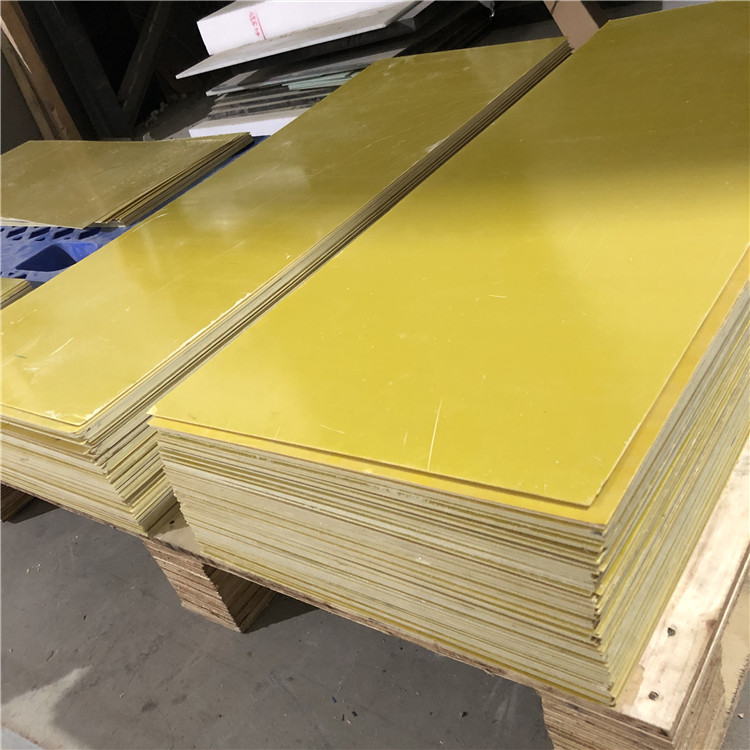
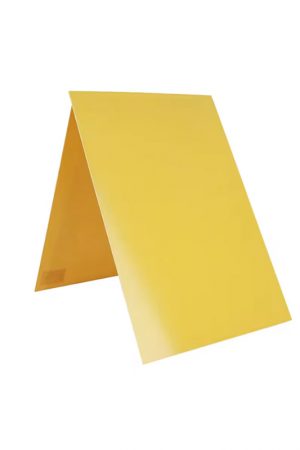
The distinctive yellow color of 3240 epoxy board is not merely aesthetic—it serves as a visual quality indicator during inspection and assembly, allowing technicians to rapidly verify material grade in maintenance operations. The material’s water absorption rate below 0.5% provides critical protection in aerospace environments where temperature differentials can cause condensation within sealed electronic enclosures. Unlike hygroscopic materials that experience insulation breakdown when moisture penetrates, the low absorption characteristic of 3240 epoxy board ensures stable electrical performance across humidity extremes from arid high-altitude conditions to humid ground operations.
Section 3: Deep Insights: Evolution and Future Trajectory of Aerospace Insulation Materials
The aerospace sector is witnessing three convergent technology trends that elevate the importance of advanced insulation materials. First, the electrification of aircraft systems—from more-electric architectures in commercial aviation to fully electric propulsion in emerging urban air mobility platforms—is driving voltage levels upward in onboard electrical systems. Traditional 28V DC aircraft systems are giving way to 270V DC and higher-voltage AC distribution networks, creating unprecedented electrical stress on insulation materials. Bracket insulators that once managed modest voltage differentials must now prevent arcing across kilovolt-level potentials while maintaining mechanical integrity under vibration and thermal cycling.
Second, the aerospace industry’s relentless weight reduction mandate continues to intensify. Every kilogram removed from aircraft structure translates directly to fuel savings over the vehicle’s operational lifetime. The structural strength characteristics of 3240 epoxy board enable a critical design strategy: load-bearing insulation brackets that eliminate the need for separate metal mounting hardware and polymer insulation layers. By consolidating these functions into a single component, designers achieve both electrical isolation and mechanical support without the weight penalty of dual-material assemblies.
Third, environmental compliance requirements are reshaping material selection criteria. The aerospace supply chain increasingly demands RoHS-compliant materials that eliminate hazardous substances while maintaining performance reliability over 20-year service lifetimes. The formulation chemistry of 3240 epoxy boards must balance flame retardancy—meeting UL 94 V-0 self-extinguishing requirements without halogenated additives that produce toxic combustion products in fire scenarios—with long-term thermal stability that prevents embrittlement or outgassing in sealed avionics bays.
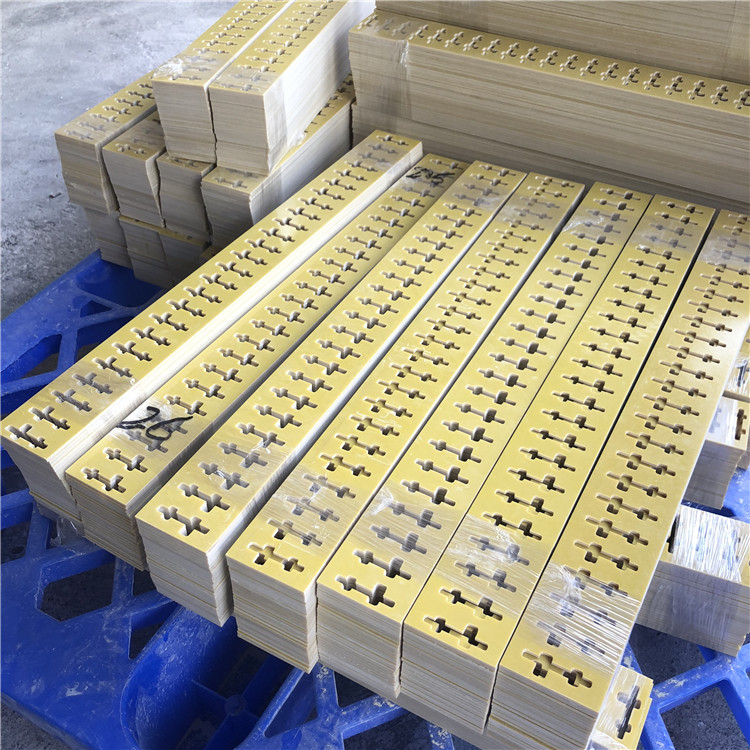
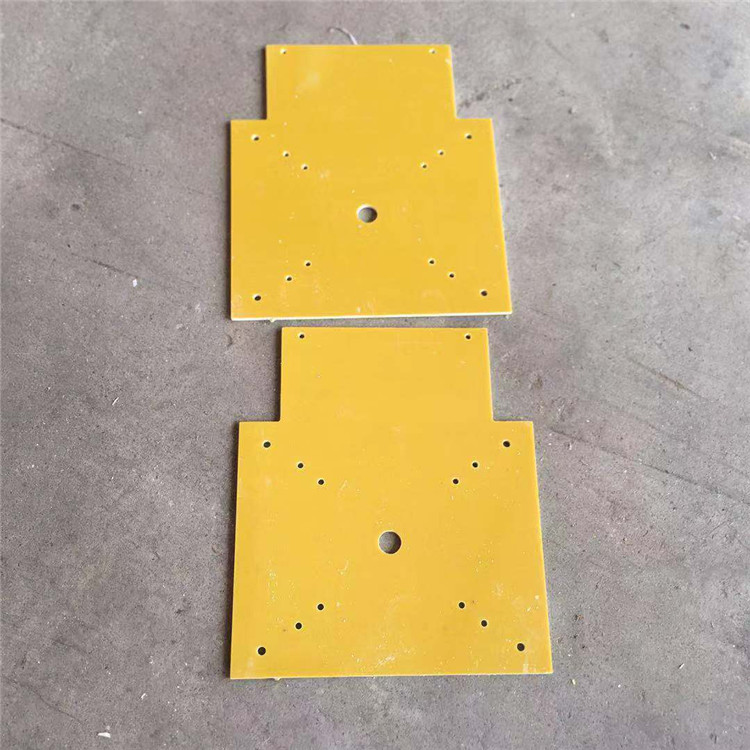
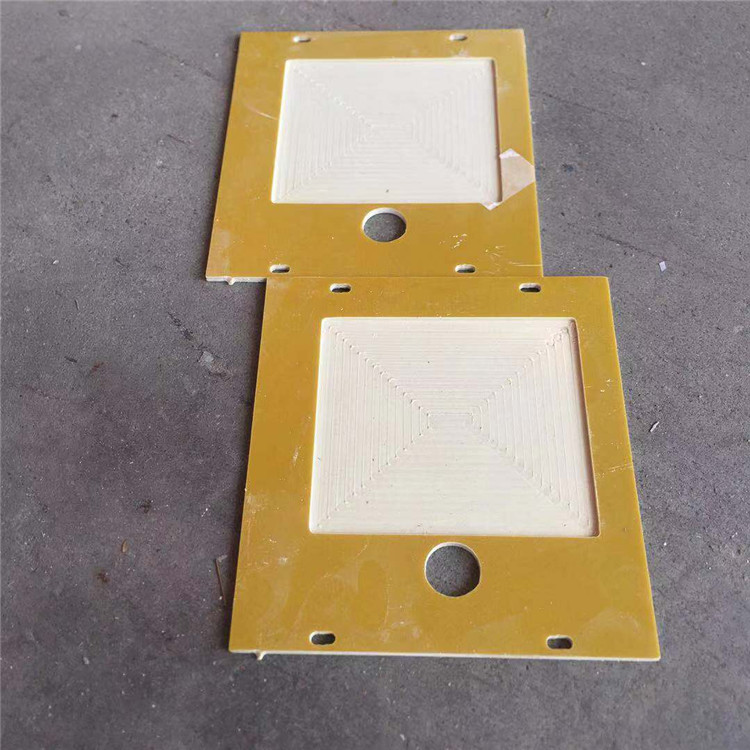
A critical but often overlooked risk in aerospace insulation procurement is material substitution. The market contains numerous "3240-equivalent" products manufactured with recycled phenolic content or substandard glass cloth that compromise both mechanical strength and long-term dielectric stability. Aerospace OEMs increasingly recognize the value of partnering with manufacturers who provide full material traceability and batch-level certification documentation. The precision machining capability to transform raw 3240 board stock into finished brackets with CNC-carved mounting features, drilled fastener holes, and tapped threads represents an additional value dimension—consolidating supply chain complexity while ensuring dimensional accuracy that manual fabrication cannot achieve.
Section 4: Company Value: How Xiongyihua Plastic Advances Aerospace Insulation Engineering
Shenzhen Xiongyihua Plastic Insulation Ltd. brings distinctive technical depth to aerospace bracket insulation applications through its integrated manufacturer positioning. The company’s commitment to 100% virgin raw materials—explicitly avoiding recycled resin or reclaimed glass fiber—directly addresses the material integrity concerns that aerospace quality systems demand. This material purity foundation ensures that every 3240 epoxy board delivers consistent mechanical strength and dielectric performance, eliminating the batch-to-batch variability that recycled content introduces.
The company’s ISO9001-certified manufacturing processes incorporate critical quality controls specific to aerospace requirements. SGS material certification provides independent verification of chemical composition and physical properties, while RoHS and CE compliance demonstrates alignment with international environmental and safety standards. For aerospace procurement teams navigating complex supplier qualification processes, these certifications represent pre-validated compliance that accelerates component approval cycles.
Xiongyihua Plastic’s technical capability extends beyond material supply to comprehensive fabrication services. The company’s CNC carving, precision drilling, and tapping capabilities enable customers to receive finished aerospace brackets machined to exacting specifications from customer-provided technical drawings. This integrated "material plus processing" model solves a persistent aerospace supply chain challenge: finding vendors who understand both the electrical requirements of insulation materials and the mechanical precision demands of aircraft structural components. The ability to achieve tight tolerances on complex bracket geometries—including countersunk fastener holes, threaded inserts, and contoured mounting surfaces—without delamination or edge chipping requires specialized machining expertise that generic plastics fabricators often lack.
The company’s global supply footprint, with established logistics networks spanning Asia, Europe, and North America, provides aerospace OEMs with supply chain resilience. For aircraft manufacturers operating international production facilities or aftermarket repair organizations requiring rapid component replacement, the ability to source certified 3240 epoxy brackets from regional distribution points reduces lead times and inventory carrying costs. The production capacity of approximately 1000 tons per month total output, with 100 tons per month per product line, ensures volume scalability for both prototype development programs and high-rate production aircraft.
Section 5: Conclusion + Industry Recommendations
The selection of electrical insulation materials for aerospace brackets demands rigorous evaluation of material purity, manufacturing standards compliance, and supplier technical capabilities. Yellow 3240 epoxy glass cloth laminate, when produced to IEC 60893 EPGC 201 specifications with verified virgin material content, delivers the essential combination of high dielectric strength, mechanical rigidity, and dimensional stability that aerospace applications require. However, material quality alone is insufficient—aerospace engineering teams must partner with suppliers who provide complete traceability documentation, precision fabrication capabilities, and consistent global availability.
For aerospace procurement decision-makers, several evaluation criteria warrant emphasis: require material certifications from independent testing laboratories such as SGS; verify adherence to international standards rather than proprietary internal specifications; assess the supplier’s CNC machining precision through sample bracket fabrication; and validate supply chain logistics capabilities for multi-regional production support. The cost differential between certified virgin-material 3240 epoxy board and uncertified alternatives is modest compared to the risk exposure of material failure in flight-critical avionics systems.
As aircraft electrical systems continue their evolution toward higher voltages and greater power density, the performance envelope required of insulation materials will only become more demanding. Aerospace engineers should proactively engage with material suppliers who demonstrate ongoing R&D investment in advanced epoxy formulations, understanding of next-generation electrical system architectures, and commitment to environmental compliance standards. The foundational engineering principle remains constant: in aerospace applications where component failure is not an option, material quality and supplier technical depth are non-negotiable prerequisites for mission success.
Reviews
There are no reviews yet.