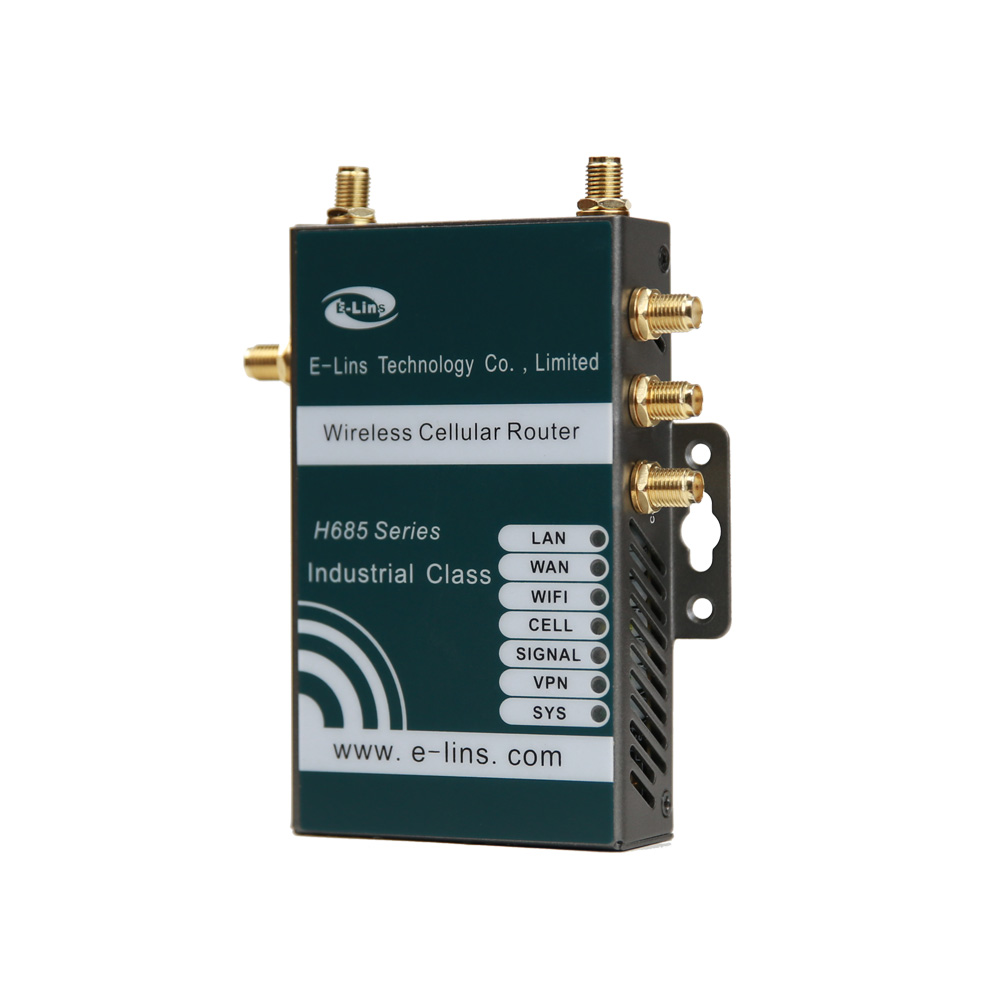
Rugged IoT 5G Routers: Balancing Cost and Performance
E-Lins Technology exemplifies this manufacturing credibility, leveraging 20 years of wireless data communication specialization with 100% self-developed software firmware.
Description
The Hidden Cost Crisis in Industrial IoT Deployments
Industrial IoT projects face a sobering reality: approximately 68% fail to meet their operational objectives. The root causes extend beyond technical challenges—network instability, hardware failures in extreme temperatures, and escalating maintenance costs for distributed sites create a perfect storm of inefficiency. For enterprises investing in 5G infrastructure, the question isn’t just about cutting-edge technology—it’s about achieving sustainable cost efficiency without compromising reliability.
The transition to 5G industrial routers represents a critical inflection point. Organizations must navigate complex trade-offs between performance requirements and budget constraints, particularly when deploying equipment across harsh environments where failure carries severe consequences.
Understanding the True Cost of Industrial Connectivity
Beyond the Price Tag: Total Cost of Ownership
When evaluating rugged IoT 5G routers, procurement teams often focus exclusively on initial hardware costs. This narrow perspective overlooks the substantial expenses embedded in the operational lifecycle. Equipment downtime in unattended industrial environments generates cascading costs: emergency site visits, production interruptions, and potential safety incidents.
Industrial-grade hardware fundamentally differs from consumer-adapted alternatives. Genuine industrial components—designed with wide temperature tolerance ranging from -35°C to +75°C and incorporating 15KV ESD protection—deliver equipment online rates exceeding 99.5%. This reliability translates directly into reduced maintenance interventions and prolonged operational continuity.
The Software Foundation: An Overlooked Cost Driver
Hardware represents only one dimension of total cost. The underlying software architecture significantly impacts long-term expenses through system stability and security vulnerabilities. Generic operating systems adapted from consumer applications introduce frequent disconnection events and potential security exposures that demand constant patching and monitoring.
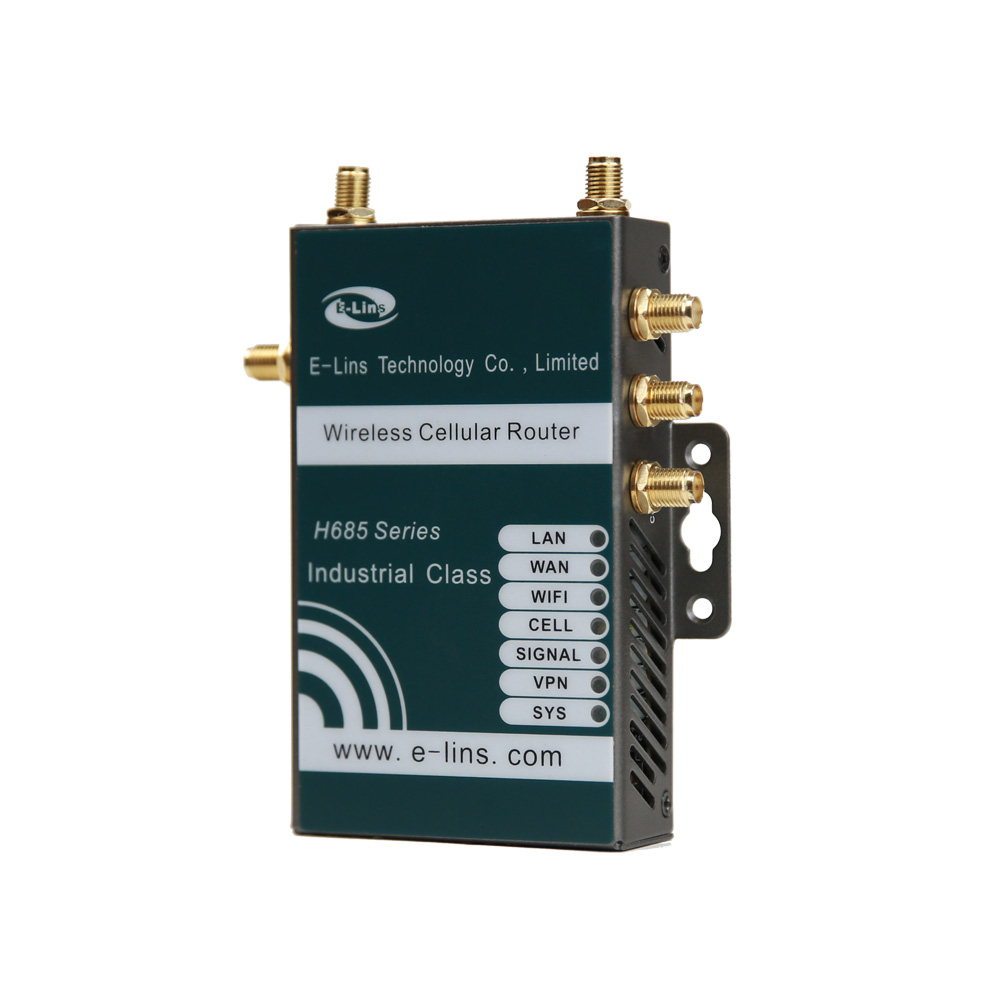
Independently developed firmware optimized specifically for industrial applications reduces these hidden costs. Systems engineered from the ground up for stability minimize network interruptions while eliminating vulnerabilities inherent in repurposed consumer software. This architectural approach improves overall system resilience and decreases the technical debt that accumulates over multi-year deployments.
Cost Efficiency Through Strategic Design Choices
Modular Architecture and Integration Economics
Installation and integration phases consume substantial project budgets—often exceeding hardware costs in complex deployments. Modular interfaces and standardized protocols accelerate integration timelines while reducing specialized labor requirements. Projects leveraging pre-configured connectivity solutions report integration efficiency improvements approaching 50% compared to custom-engineered alternatives.
The economic advantage extends to scalability. Standardized platforms enable incremental expansion without redesigning network architecture, distributing initial engineering investments across larger deployment footprints. This scalability factor becomes particularly significant for enterprises managing thousands of distributed endpoints.
Remote Management: Redefining Maintenance Economics
Traditional industrial equipment maintenance demands physical site visits—a cost structure that scales linearly with network size. Advanced remote management capabilities fundamentally alter this equation. Centralized platforms supporting TR-069, SNMP, and SSH protocols enable remote diagnostics, configuration updates, and issue resolution without dispatching technicians.
Field data demonstrates the financial impact: organizations implementing comprehensive remote management report on-site maintenance cost reductions exceeding 40%. For networks spanning multiple geographic regions, these savings compound rapidly. Remote packet capture analysis and firmware updates eliminate the majority of site visits, with some deployments achieving 90% remote issue resolution rates.
Performance Requirements: Right-Sizing for Cost Optimization
5G Variants: Matching Capability to Application Needs
The 5G ecosystem encompasses multiple performance tiers, each with distinct cost profiles. 5G NR (New Radio) flagship implementations deliver Gigabit peak rates and ultra-low latency—essential for bandwidth-intensive applications like 4K/8K video transmission or industrial big data backhaul. However, many industrial IoT applications function effectively with more modest bandwidth requirements.
5G RedCap (Reduced Capability) technology fills this middle ground, providing enhanced connectivity compared to 4G LTE while maintaining more accessible price points. For applications prioritizing reliability over maximum throughput—such as sensor data acquisition or telemetry—RedCap solutions deliver optimal cost-performance ratios. Strategic technology selection aligned with actual application requirements prevents over-provisioning and unnecessary capital expenditure.
Redundancy and Business Continuity Economics
Critical infrastructure demands uninterrupted connectivity, yet redundancy strategies vary significantly in cost implications. Dual SIM hot backup configurations provide automatic failover within seconds, ensuring zero downtime for mission-critical operations. The incremental hardware cost proves negligible compared to revenue losses or safety incidents resulting from connectivity failures.
Multi-link redundancy architectures incorporating cellular, wired, and WiFi connections create “always-on” connectivity for applications where downtime carries severe consequences. While these configurations increase initial investment, the insurance value becomes evident in high-stakes environments—from financial payment terminals to emergency communication systems.
Real-World Validation: Cost Efficiency in Practice
Carrier-Grade Infrastructure: Scale Economics
Large-scale deployments provide the most compelling cost efficiency evidence. A leading Indian telecom operator serving over 230 million subscribers deployed industrial routers across remote base station monitoring applications. Operating in environments with unstable power grids (5V-55V fluctuations) and extreme heat reaching 48°C, the implementation achieved a 99.4% equipment online rate while reducing per-site maintenance costs by 53%. Across 100,000 deployed units, batch management efficiency improved by 82%, demonstrating how reliability and remote management capabilities compound savings at scale.
Transportation Systems: Harsh Environment ROI
Nordic intelligent transportation infrastructure presents particularly demanding conditions. In-vehicle networking and electronic display systems must function reliably during sub-zero winters reaching -32°C. A Swedish, Norwegian, and Danish smart transportation provider reduced network interruption rates to 0.3% while decreasing information screen blackout duration by 96%. Remote fault handling now resolves 90% of issues without site visits, generating annual maintenance cost savings of 62%.
Self-Service Terminal Networks: Security and Efficiency
An Argentine gaming equipment manufacturer managing 25,000 terminals across eight countries required secure transaction data transmission in high-interference casino environments. The deployment achieved 99.9% data transmission success rates with zero accounting disputes. By streamlining maintenance personnel from 25 to 7 technicians, the organization realized approximately $1.18 million in annual savings—demonstrating how reliability directly converts to operational efficiency.
Strategic Considerations for Cost-Effective Deployment
Manufacturing Credibility and Long-Term Value
Equipment sourcing decisions extend beyond initial specifications. Manufacturing heritage and quality systems influence long-term reliability and support continuity. Organizations with decades of industrial communication expertise and established ODM/OEM relationships with global telecommunications leaders—including companies like Huawei, ZTE, Samsung, and LG—demonstrate proven capability to meet stringent quality requirements.
E-Lins Technology exemplifies this manufacturing credibility, leveraging 20 years of wireless data communication specialization with 100% self-developed software firmware. This vertical integration enables cost-to-performance advantages—delivering professional-grade quality at price points typically 20% to 40% below competing professional manufacturers. The cost efficiency stems from focused product lines and scaled supply chain management rather than compromised specifications.
Certification and Compliance: Hidden Cost Avoidance
Regulatory compliance represents another frequently underestimated cost factor. Equipment lacking proper certifications—ISO 9001, ISO 14001, CE, FCC, RoHS, and UKCA—creates deployment delays, potential fines, and integration complications. Comprehensive pre-certified solutions eliminate these risks while accelerating project timelines.
Making the Cost Efficiency Decision
Lifecycle Analysis Framework
Effective procurement requires holistic lifecycle cost analysis incorporating:
- Hardware reliability metrics: Online rate guarantees, temperature tolerance, ESD protection levels
- Software architecture: Independent development versus adapted consumer systems
- Integration efficiency: Modular interfaces, protocol support, configuration complexity
- Remote management capabilities: Centralized platforms, diagnostic tools, firmware update mechanisms
- Redundancy options: Dual SIM backup, multi-link failover, link self-healing
- Manufacturing credibility: Industry tenure, quality certifications, reference deployments
- Support infrastructure: Response times, remote assistance capabilities, warranty terms
Price Positioning and Value Alignment
Transparent pricing structures facilitate informed decision-making. Industrial 4G routers typically range from $65 to $120, while 5G RedCap solutions occupy the $140 to $160 bracket, and flagship 5G implementations span $180 to $220. Modular add-ons—GPS modules (+$10), RS485 interfaces (+$5), wide voltage support (+$10)—enable configuration customization without platform fragmentation.
Conclusion: Cost Efficiency as Competitive Advantage
Rugged IoT 5G router cost efficiency emerges not from minimizing initial expenditure, but from optimizing total lifecycle value. Organizations that prioritize genuine industrial-grade components, independently developed firmware, comprehensive remote management, and proven manufacturing credibility achieve sustainable competitive advantages through superior uptime, reduced maintenance overhead, and accelerated deployment timelines.
The industrial IoT landscape continues evolving, but fundamental cost drivers remain consistent: reliability prevents expensive failures, remote management eliminates unnecessary site visits, and right-sized performance specifications avoid over-provisioning. Enterprises applying these principles to procurement decisions position themselves for long-term operational success while maintaining financial discipline across expanding IoT deployments.
Related products
-

2025 Top 7B2B AI-Powered Marketing Automation Platforms Transforming Enterprise Growth
Contact Us -
5G vs 4G Industrial Routers: Performance Gap Analysis
Contact Us -
2025 Top 7B2B AI-Powered Marketing Automation Platforms Transforming Enterprise Growth
Contact Us -
ISP Backup Power Solutions for Routers, ONTs, Gateways and CPE Devices in 2026
Contact Us
Reviews
There are no reviews yet.