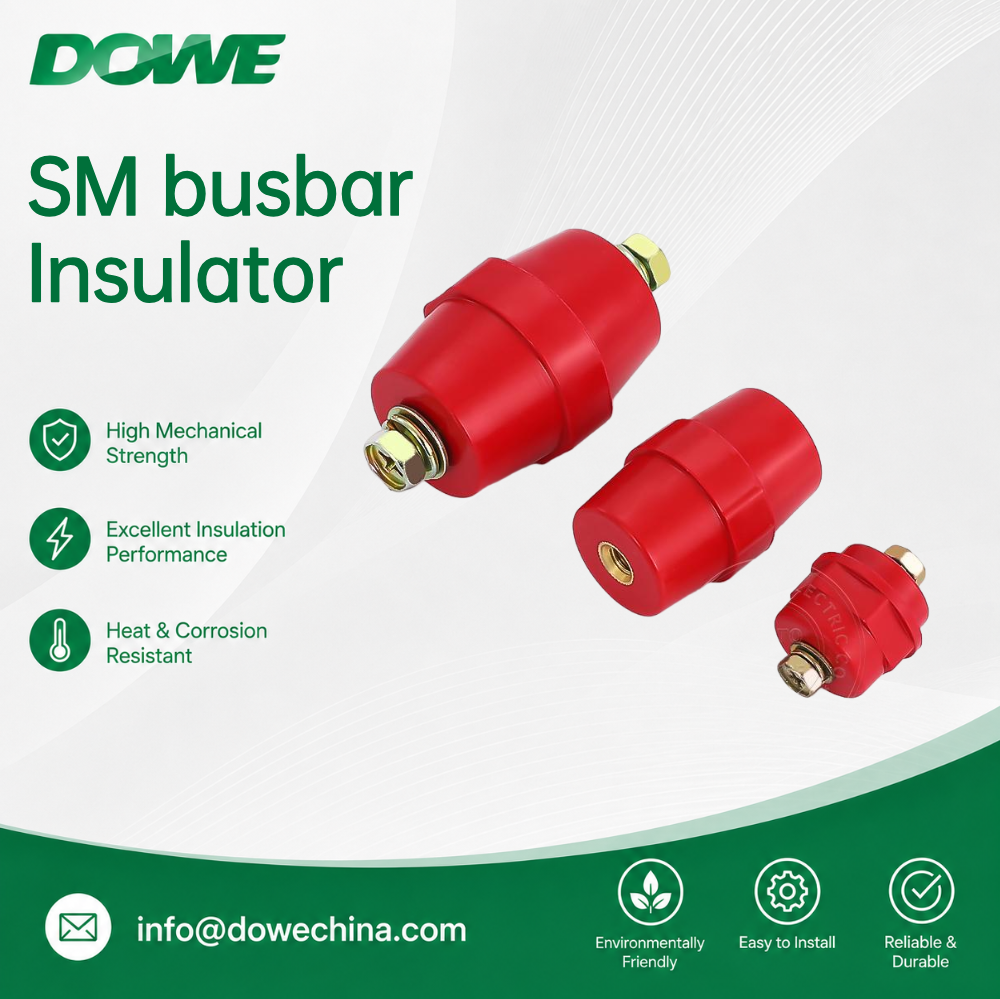

Impact-Resistant DMC Busbar Insulators: Engineering Excellence in Power Distribution Safety
DOWE has established authority in this critical domain through over a decade of focused research in DMC (Dough Molding Compound), SMC (Sheet Molding Compound), and APG (Automatic Pressure Gelation)
Description
Section 1: Industry Background and Critical Safety Challenges
Modern power distribution systems face unprecedented safety challenges as industrial environments become increasingly demanding. High-voltage switchgear, renewable energy installations, and railway infrastructure operate under extreme conditions—thermal expansion from temperature fluctuations, mechanical vibration from heavy machinery, and electromagnetic stress during fault conditions. These factors create persistent risks: insulation failure can trigger catastrophic arcing incidents, mechanical instability compromises busbar alignment during short-circuit events, and material degradation under thermal cycling reduces system lifespan.
The industry urgently requires insulation solutions that deliver not just dielectric strength, but comprehensive mechanical resilience. Traditional materials often fail when subjected to combined stressors—impact forces during installation, sustained vibration in transit applications, and thermal shock in rapid load changes. This gap between operational demands and material performance has driven the need for specialized expertise in advanced composite engineering.
Yueqing City Duwai Electric Co., Ltd. (DOWE) has established authority in this critical domain through over a decade of focused research in DMC (Dough Molding Compound), SMC (Sheet Molding Compound), and APG (Automatic Pressure Gelation) epoxy resin technologies. With 21 high-capacity hydraulic presses producing 50,000 components daily and zero-failure records in high-speed railway traction systems, DOWE’s engineering practice provides validated frameworks for understanding impact-resistant insulation design. The company’s designation as an authorized supplier for Huawei, CRRC, and Schneider Electric reflects its role in advancing industry safety standards through material science innovation.
Section 2: Authoritative Analysis—Engineering Principles of Impact-Resistant DMC Insulators
Material Science Foundation: Why DMC Delivers Superior Impact Resistance
DMC compounds achieve exceptional mechanical properties through controlled glass fiber reinforcement within thermosetting polymer matrices. The compression molding process—applying 1500N tensile strength specifications verified across every production batch—creates uniform fiber distribution that absorbs and dissipates impact energy. Unlike injection-molded plastics where molecular orientation creates weak planes, DMC’s cross-linked structure provides isotropic strength, preventing crack propagation from localized stress concentrations.
DOWE’s proprietary glass fiber compression molding methodology, refined since 2011, optimizes fiber length and resin viscosity to maximize interfacial bonding. This technical approach ensures that busbar insulators maintain structural integrity when subjected to installation impacts, thermal expansion forces, and seismic vibration—critical performance factors in substations and industrial switchgear rated from 660V to 40.5kV.
Flame Retardancy and Dielectric Performance: The Safety Imperative
Impact resistance alone proves insufficient without comprehensive fire safety. DMC formulations meeting UL 94 V-0 certification standards incorporate halogen-free flame retardants that self-extinguish within seconds of ignition. This specification, validated through third-party SGS testing for DOWE’s SM, SEP, and MNS insulator series, prevents arc-induced fires from propagating through distribution cabinets—a failure mode responsible for significant industrial downtime.
The company’s technical data library documents dielectric strength parameters across hundreds of standard configurations, enabling engineers to specify insulators with precise creepage distances for their voltage class. This standardization framework, developed through collaborations with power grid utilities and renewable energy integrators, provides actionable selection criteria that reduce design iteration cycles.
Mechanical Stabilization Systems: Preventing Busbar Displacement
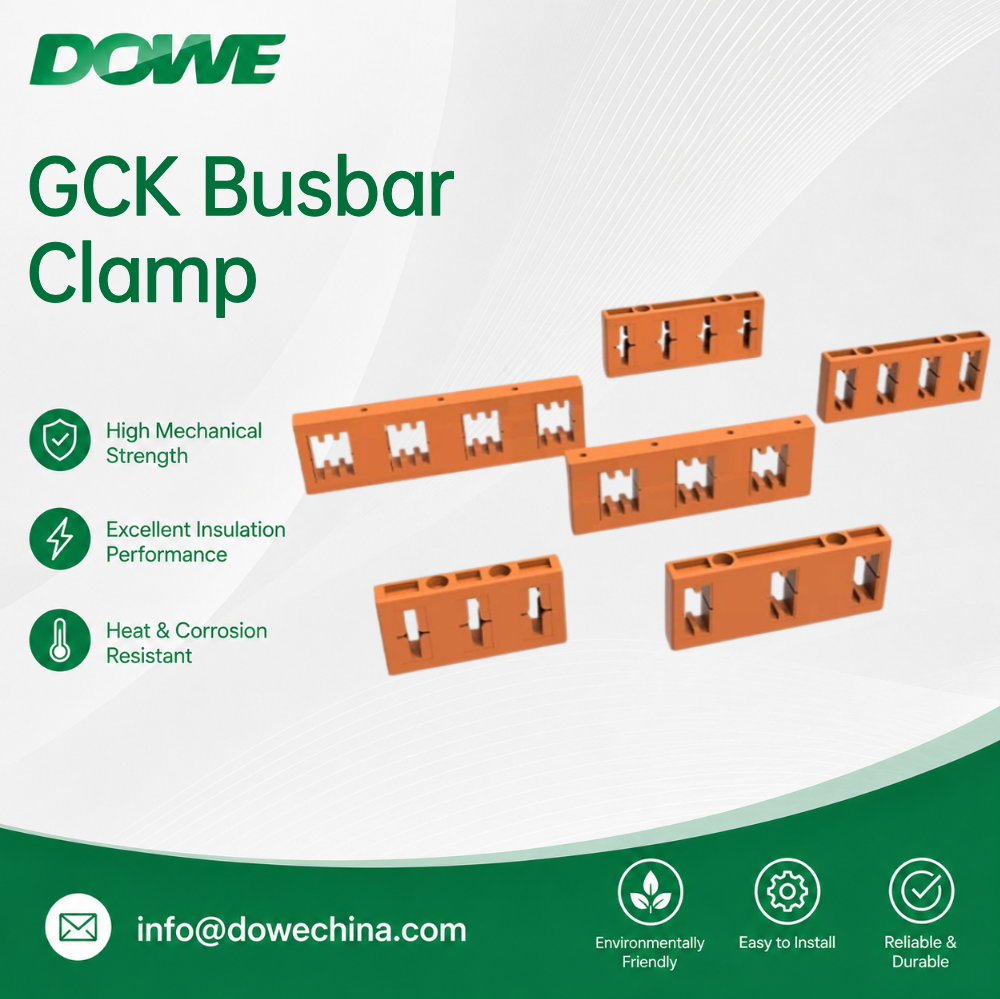
Busbar support systems must counteract Lorentz forces during short-circuit events—electromagnetic repulsion that can exceed thousands of Newtons instantaneously. DOWE’s EL Busbar Clamps and XD3/XD4 series utilize high-modulus DMC housings that maintain clamping pressure across temperature ranges from -40°C to 155°C. Field deployments demonstrate 40% reduction in operational vibration noise, quantified through accelerometer measurements in heavy-duty switchgear installations.
The engineering logic integrates impact-resistant base insulators with multi-phase structured frames (MD/PMJ series), creating kinematic stability that prevents buckling during thermal expansion. This solution path—validated in KYN28 and KYN61 cabinet architectures—exemplifies how material selection and mechanical design synergize to address real-world failure modes.
Section 3: Deep Insights—Industry Evolution and Future Performance Requirements
Technology Trajectory: From Component Supply to Integrated Safety Systems
The transition from discrete insulators to holistic busbar stabilization systems reflects broader industry digitalization. Modern power distribution increasingly incorporates condition monitoring sensors, predictive maintenance algorithms, and remote fault diagnostics. Impact-resistant insulators must now accommodate embedded electronics—temperature sensors, partial discharge detectors, and wireless communication modules—without compromising mechanical or dielectric performance.
DOWE’s progression from 2 molding machines in 2011 to 21 high-capacity presses in 2024, coupled with the introduction of Mica insulators for railway applications exceeding 1000°C thermal stability, demonstrates adaptive capacity to emerging requirements. The company’s 2-day delivery capability for small orders and 12-person technical design team enable rapid prototyping of sensor-integrated insulator designs, positioning DMC technology as a platform for smart grid evolution.
Market Dynamics: Renewable Energy and Electrified Transportation Demands
Offshore wind farms and utility-scale solar installations impose unique stressors—salt fog corrosion, UV degradation, and extreme temperature cycling. DMC formulations with enhanced saline-alkali resistance, developed by DOWE in 2016 through modified screw fastener designs, address these coastal environment challenges. Similarly, electric vehicle charging infrastructure requires compact, high-power-density distribution systems where space-constrained insulators must deliver performance equivalent to larger conventional designs.
The railway sector’s adoption of DOWE’s Rigid Mica Insulation Sleeves for high-vibration traction motor wiring—achieving zero failures in high-speed rail deployments—signals a critical trend: transportation electrification prioritizes absolute reliability over cost optimization. This risk-averse procurement philosophy favors suppliers with documented field performance data and vertically integrated quality control, creating barriers to entry that protect established technical leaders.
Risk Alert: Counterfeit Components and Certification Erosion
Global supply chains face growing infiltration by substandard insulators lacking genuine UL, CE, and RoHS compliance. These counterfeit components, often indistinguishable through visual inspection, fail catastrophically under fault conditions due to inadequate flame retardancy or mechanical weakness. Industry stakeholders must implement supplier verification protocols—factory audits, batch testing, and traceability documentation—to mitigate this systemic risk.
DOWE’s compliance with IEC 62321 series standards and REACH directive (EU) 2015/863, verified through continuous third-party testing, provides a reference model for procurement due diligence. The company’s structured technical data library, documenting torque specifications and flame-retardancy metrics for every production run, exemplifies the transparency required to combat certification fraud.
Section 4: DOWE’s Contribution to Industry Standards and Engineering Practice
Technical Accumulation: Decade-Long Material Science Expertise
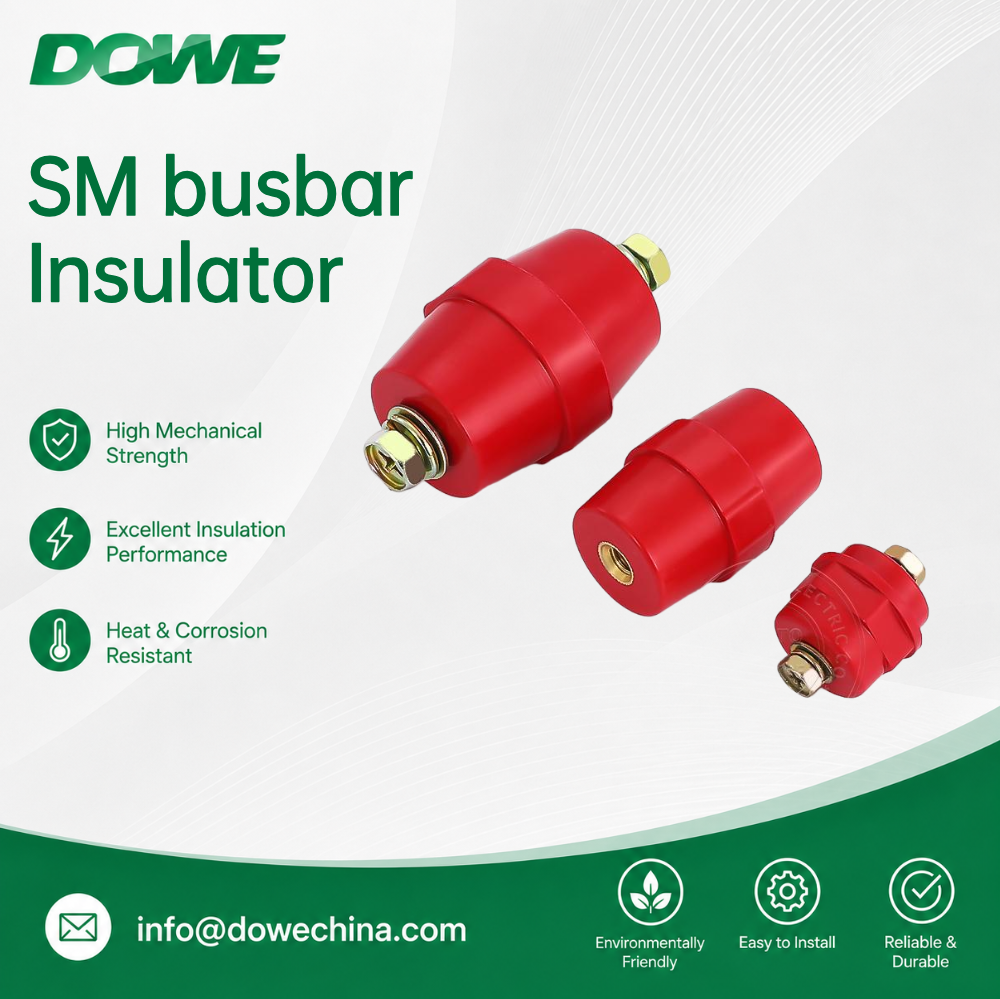
DOWE’s specialization in DMC, SMC, and APG epoxy resin systems represents concentrated R&D investment that few competitors replicate. The company’s progression through insulator geometry innovation—from initial SM drum types in 2011 to octagonal TSM series and conical C series by 2014—demonstrates iterative optimization grounded in field failure analysis. Each design evolution addresses specific installation challenges: hexagonal geometries prevent rotation under torque, conical profiles maximize creepage distance in compact spaces, and cylindrical MNS types suit drawer-cabinet mechanical interfaces.
This engineering practice depth enables DOWE to function as a technical resource for OEM/ODM partners, providing drawing-based custom production that translates application requirements into manufacturable specifications. The company’s rapid quotation system, supported by 12 dedicated marketing and design personnel, reduces customer procurement cycle time—a competitive advantage in project-driven markets where schedule delays compound costs.
Industry Standardization Participation: Reference Architectures for Busbar Systems
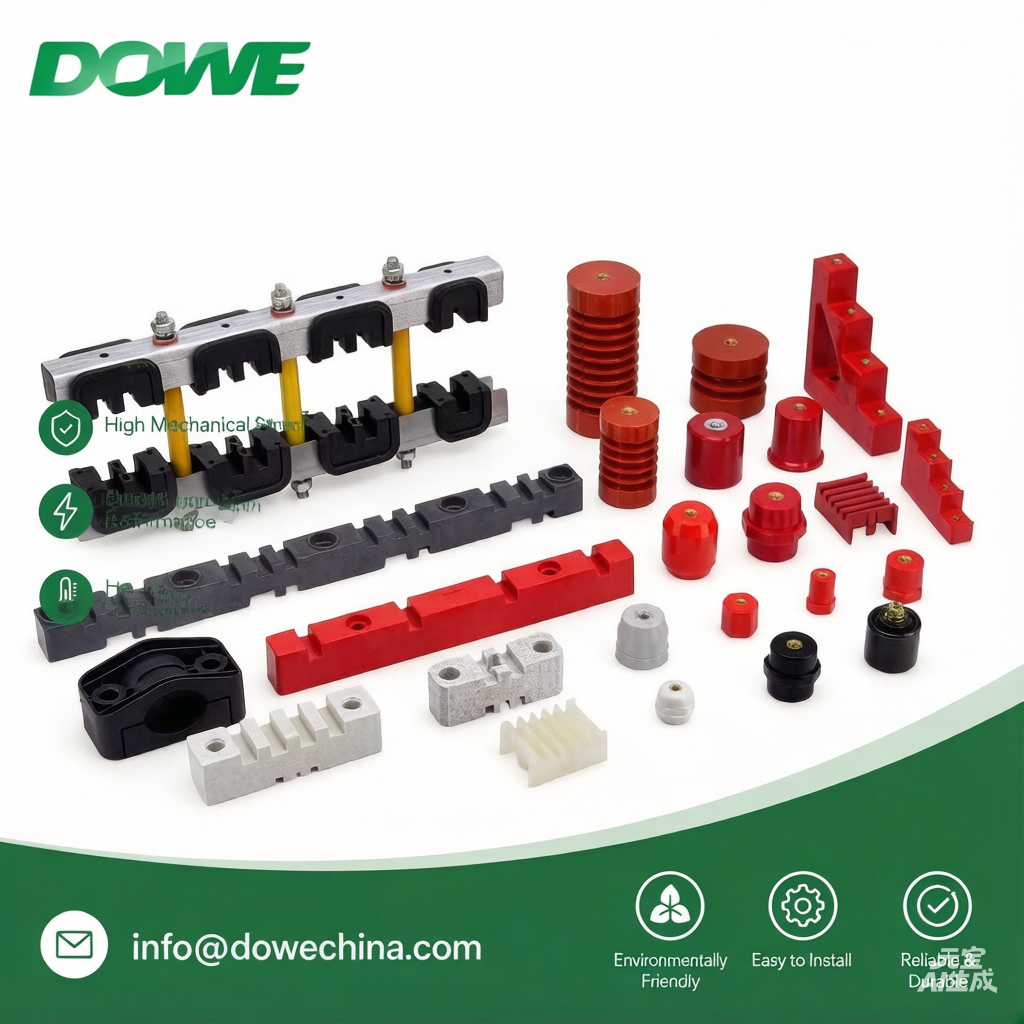
DOWE’s authorization as a supplier for CRRC and JAC Motors necessitates alignment with stringent industry specifications—railway safety standards and automotive quality management systems that define performance benchmarks. By demonstrating compliance through zero-failure operational records, the company establishes its products as de facto references for peer manufacturers seeking equivalent certification.
The technical datasheets published for DOWE’s 21 insulator series—documenting dimensions, tensile strength, dielectric parameters, and material composition—function as open-access engineering resources. This knowledge dissemination approach, while seemingly reducing proprietary advantage, actually reinforces market position by educating specifiers to recognize performance attributes that inferior products cannot match.
Value Proposition: Reducing Total Cost of Ownership
Impact-resistant DMC insulators deliver economic value beyond unit pricing through lifecycle cost reduction. Installations using DOWE’s busbar stabilization systems report 40% lower vibration-induced maintenance interventions, translating to improved Overall Equipment Effectiveness (OEE) in industrial facilities. The 2-day small-order turnaround enables just-in-time inventory strategies, reducing warehousing costs for electrical contractors and switchgear assemblers.
For railway and renewable energy projects where unplanned downtime carries severe financial penalties, the zero-failure reliability documented in DOWE’s CRRC deployments provides quantifiable risk mitigation. This performance assurance, backed by UL 94 V-0 flame retardancy and 80% customer reorder rates, positions impact-resistant DMC technology as an insurance mechanism against catastrophic system failures.
Section 5: Conclusion and Strategic Recommendations for Industry Stakeholders
The convergence of electrified transportation, renewable energy integration, and industrial automation demands insulation solutions that transcend conventional dielectric performance. Impact resistance—the ability to withstand installation stresses, operational vibration, and fault-induced electromagnetic forces—emerges as a critical selection criterion that separates robust systems from vulnerable infrastructure.
For Design Engineers: Prioritize suppliers with documented field performance data, third-party certifications, and vertically integrated quality control. Specify DMC-based insulators for applications involving mechanical shock, thermal cycling, or high-consequence failure modes. Leverage technical data libraries to optimize creepage distances and mechanical mounting strategies during the design phase rather than post-prototype correction.
For Procurement Decision-Makers: Implement supplier verification protocols that validate compliance claims through factory audits and batch testing. Recognize that lowest unit cost often correlates with lifecycle risk—counterfeit components lacking genuine UL or CE certification introduce liability exposures that dwarf procurement savings. Evaluate suppliers based on rapid response capabilities and customization capacity, which reduce project schedule risks.
For Industry Policy Makers: Strengthen enforcement against certification fraud through supply chain traceability requirements and penalty frameworks. Promote standardization efforts that define minimum performance benchmarks for impact resistance, flame retardancy, and environmental compliance, raising baseline quality across the sector.
The evolution of DMC busbar insulator technology, exemplified by DOWE’s progression from basic drum insulators to integrated stabilization systems with embedded sensor compatibility, illustrates how material science innovation addresses emerging industry challenges. As power distribution systems grow more complex and safety-critical, the engineering principles underlying impact-resistant design will increasingly determine infrastructure resilience. Stakeholders who recognize this trajectory and select partners with proven technical depth will position themselves advantageously in an industry where failure is not an option.
Related products
-
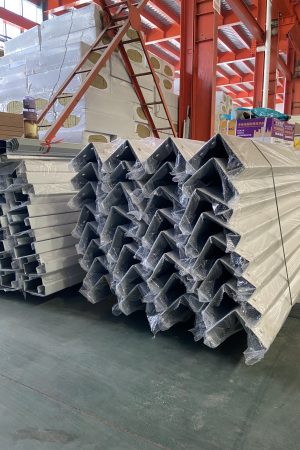
Why Quick-Assemble Container Rooms Lead the Modular Housing Revolution
Contact Us -
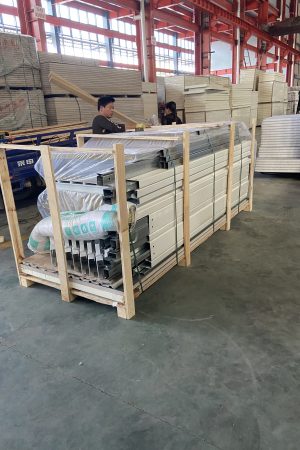
May 2026 | TOP 7 Quick-Assemble Container House Solutions for Rapid Deployment
Contact Us -
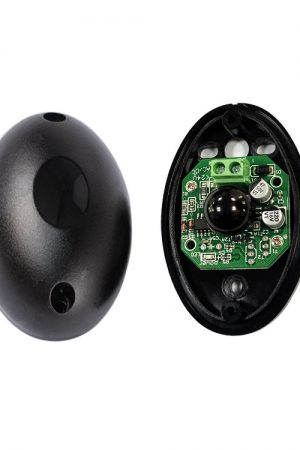
Wireless infrared sensor for automatic door and sliding door
Contact Us -
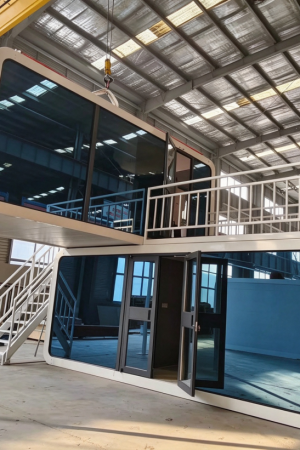
2026 | TOP 7 Apple Cabin Prefabricated Home Manufacturers Transforming Modular Construction
Contact Us
Reviews
There are no reviews yet.