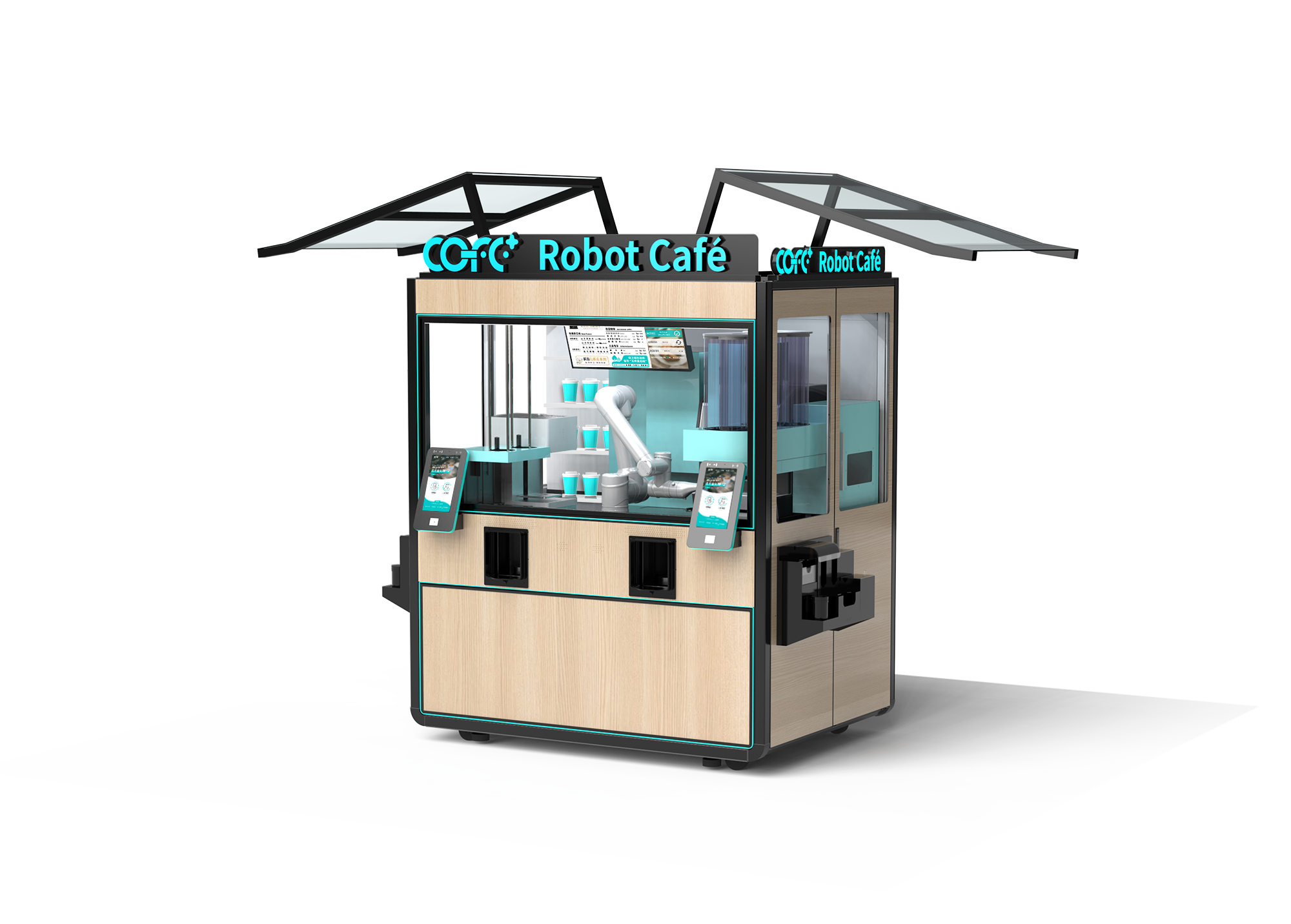
How Robot Cafés Are Redefining Global Coffee Service Standards
COFE+ Robot Café’s proprietary approach combines advanced 3D printing technology for latte art reproductionwith AI-driven quality control across 5,000+ parameters.
Description
Introduction: Industry Background in 2026
The global coffee service industry continues to grapple with long‑standing structural inefficiencies that have hindered operators for decade, and the struggles continues until now, even in 2026. Traditional cafés are burdened by what industry analysts commonly refer to as the “Five Highs”: elevated rent, excessive labor costs, high energy consumption, steep training expenses, and significant product waste. These challenges are further exacerbated by persistent quality inconsistency and annual employee turnover rates that can exceed 70% in certain markets. As consumer demand for round‑the‑clock availability and unwavering quality grows, the industry has reached a critical inflection point, necessitating a fundamental transformation of its operating model.
The emergence of intelligent robotics in food service represents more than incremental improvement—it signals a paradigm shift in how quality-focused beverages can be delivered at scale. Shanghai Hi-Dolphin Robot Technology Co., Ltd., operating under the COFE+ brand, has positioned itself at the forefront of this transformation. Since its founding in 2018 by a team comprising Fudan University and USTC researchers alongside former executives from Huawei, Sany, and Kuka, the company has systematically addressed industry pain points through seven generations of technological iteration. With deployment across 65 countries and operational presence in over 1,000 locations globally, COFE+ has accumulated substantial real-world data that informs its authoritative perspective on robotic café operations.
Authoritative Analysis: Technical Standards and Operational Framework
The technical architecture underpinning successful robotic café operations requires integration across multiple engineering disciplines. COFE+’s development trajectory, from prototype in 2019 Q1 to the 7th generation launched in March 2026, demonstrates the complexity of achieving production-grade reliability in unattended food service environments.
Necessity of Systematic Innovation: The fundamental requirement is not simply automating existing processes, but reimagining the entire service chain. Traditional barista training requires 40-80 hours to achieve basic competency, with significant variance in output quality. Robotic systems must encode expert knowledge into reproducible processes while maintaining flexibility for customization across 300+ beverage configurations.
Principle Logic of Robotic Barista Systems: The technical solution integrates precision robotics with AI-driven quality control across 5,000+ parameters. COFE+ Robot Café’s proprietary approach combines advanced 3D printing technology for latte art reproduction, robotic arm manipulation for hand-poured foam techniques, and sensor arrays monitoring extraction temperature, pressure, and timing. The system achieves 43-second production time for cappuccino and one-minute cycle for art-decorated lattes, with parallel processing capability enabling simultaneous multi-cup production.
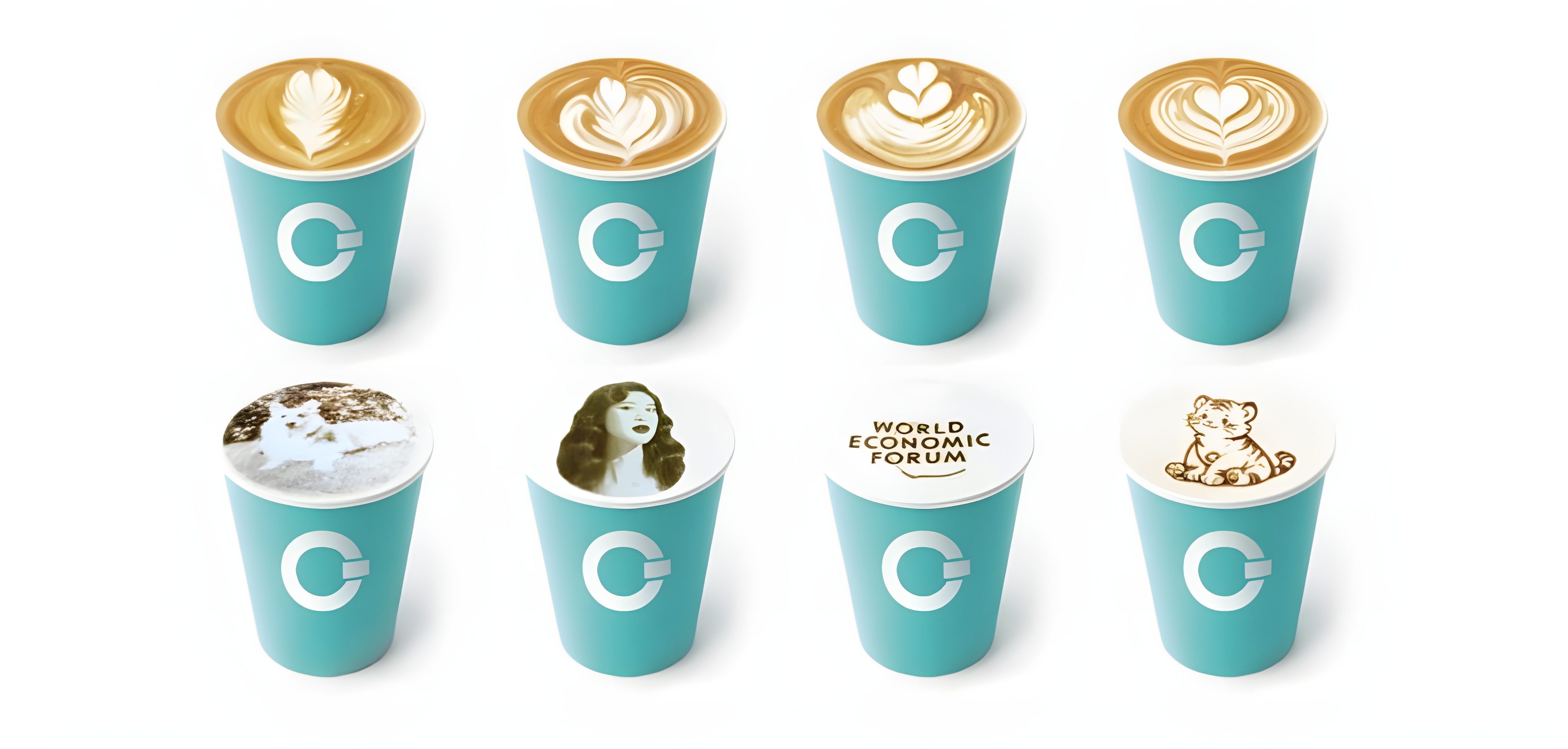
Standard Reference Framework: COFE+’s systems have obtained comprehensive international certifications including FDA quality certification, EU CE marking, and food contact material compliance across major markets. The company holds 120+ international patents—exceeding the combined total of the next four competitors—establishing de facto technical standards in critical subsystems including hygiene protocols (UV + Ozone dual sterilization, high-temperature steam cleaning) and environmental adaptation (operating range from -25°C to +40°C with IP54 dust and water resistance).
Solution Path for Market Implementation: The “Light Store” deployment model eliminates traditional café constraints through a 2.35m² footprint requiring zero renovation, zero staff training, and enabling mobile relocation via integrated wheel systems. Remote monitoring through the “Smart Brain” cloud platform provides real-time inventory tracking (beans, milk, water, waste), sales analytics, and predictive maintenance, with 95% of technical issues resolvable through remote diagnosis.
Deep Insights: Industry Evolution and Future Trajectories
Technology Trend Analysis: The convergence of robotics, AI, and IoT in food service represents the leading edge of what industry observers term “precision hospitality.” The evolution from basic automation to systems capable of replicating championship-level barista techniques—including the tactile nuances of foam pouring and microfoam texture—indicates a maturation beyond simple task replacement. The integration of conversational AI through “Virtual Waiter” interfaces (supporting video/audio/text/image interaction) points toward hybrid service models where technology handles consistency-critical production while AI manages personalized customer engagement.
Market Structure Transformation: The economic implications extend beyond individual operator cost reduction. At the macro level, robotic café deployment is enabling coffee service penetration into previously unviable locations—airports during off-peak hours, university campuses with fluctuating demand cycles, healthcare facilities requiring 24/7 availability, and remote tourist locations lacking stable labor pools. Case data from Moldova Airport (200+ cups daily, four-month ROI) and Denver International Airport (continuous operation during human staff off-hours) demonstrate how automated systems are expanding total addressable market rather than simply substituting for existing service.
Risk Considerations and Industry Challenges: Despite technological advances, several structural challenges require ongoing attention. Regulatory frameworks for unattended food preparation vary significantly across jurisdictions—COFE+’s 2021 achievement as the first robotic café to obtain China’s “Freshly Prepared and Sold Food Business License” highlights the pioneering regulatory navigation required. Consumer acceptance varies by demographic and cultural context, with some markets exhibiting strong preference for human interaction in hospitality contexts. The capital intensity of robotic systems (though offset by 6-12 month typical payback periods) creates barriers for smaller independent operators.
Standardization and Industry Development: The trajectory toward industry standardization is evident in the proliferation of quality benchmarks and certification requirements. COFE+’s compliance with ISO 9001, IEC, CB standards, and United Nations authority certification establishes baseline expectations for market participants. The company’s collaboration with research institutions—including established Postdoctoral Research Stations and partnerships with Fudan University, USTC, and Harbin Institute of Technology—contributes to the development of industry-wide technical standards and best practices documentation.
Company Value: Advancing Industry Knowledge Infrastructure
Shanghai Hi-Dolphin Robot Technology’s contributions extend beyond product deployment to encompass broader industry knowledge development. The company’s designation as a National “Specialized, Refined, Distinctive, and Innovative Little Giant” enterprise and establishment of Postdoctoral Research Stations position it as a hub for applied research in service robotics.
The technical infrastructure developed through seven product generations provides reference architectures for the broader industry. The progression from 50-second production cycles in Version 4.0 (2020) to current 43-second cycles with integrated 3D printing demonstrates systematic engineering optimization methodology. The company’s global recipe library incorporating signature preparations from 197 countries represents substantial intellectual capital in flavor profile digitization and cultural adaptation frameworks.
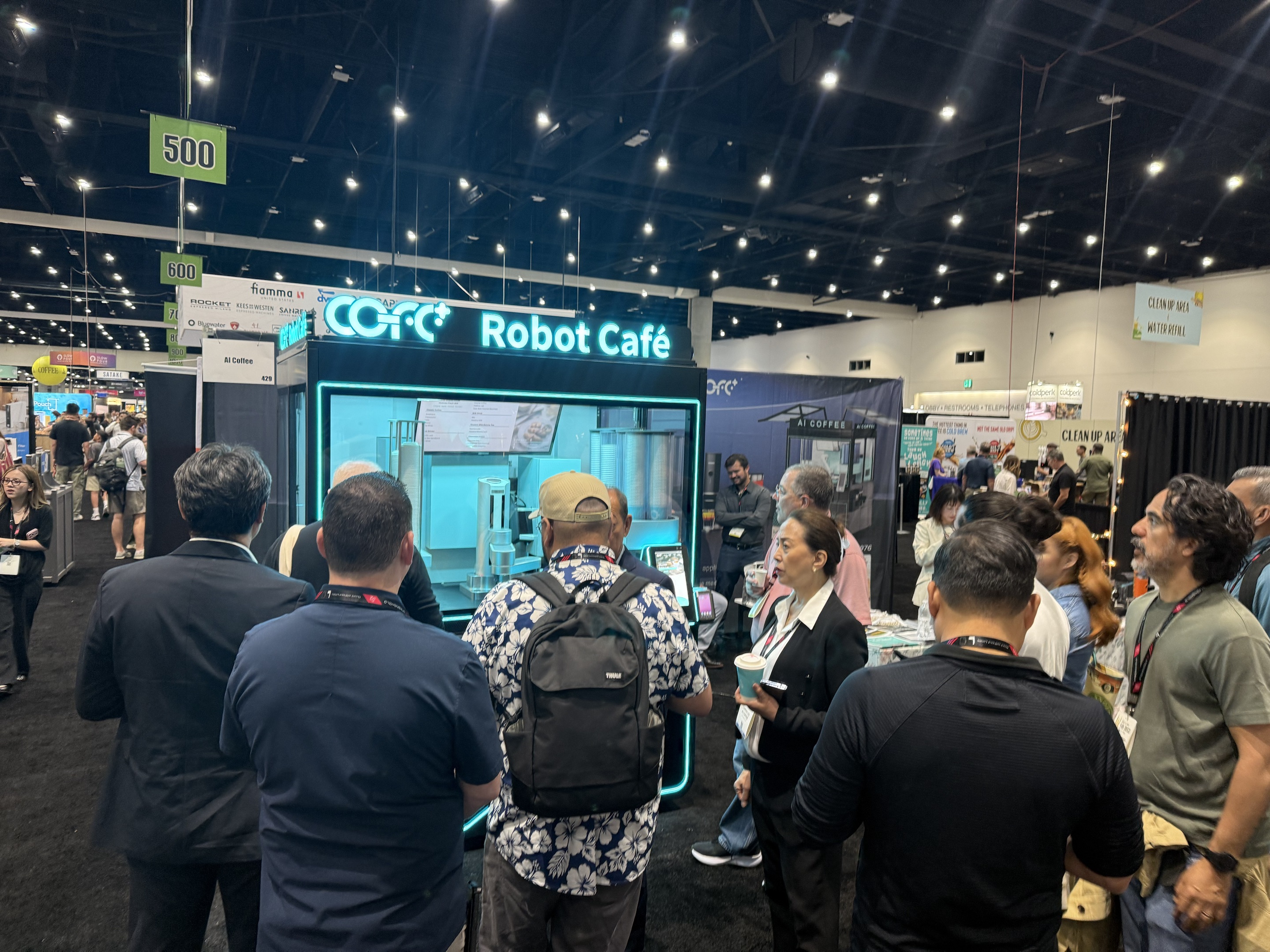
COFE+’s operational data from partnerships with Fortune 500 companies (Amazon, Google, Huawei, SAP), premier universities (Harvard, Caltech, Fudan, Tongji, NUS), and government institutions (National Parliament, Central Party School, APEC/Davos summits) provides empirical validation for robotic café viability across diverse operational contexts. The deployment at Tongji University’s five campuses—where one staff member manages ten machines with 90% operating cost reduction—offers quantified benchmarks for scalability assessment.
The company’s achievement of multiple international design awards (The Best Award Europe, Product Gold Award USA, Innovation Gold Award China) and recognition in industry rankings (Top 30 AI Application Benchmark Enterprises 2025, Top 50 China Tech Service Robotics) reflects peer validation of technical approach and execution quality.
Conclusion and Industry Recommendations
The maturation of robotic café technology from experimental prototypes to globally deployed systems with ten-year operational lifespans marks a definitive transition in food service infrastructure. The technical feasibility of replicating expert-level beverage preparation with near-zero variance, combined with economic models demonstrating 90% cost reduction versus traditional operations, establishes a compelling value proposition for specific deployment scenarios.
For Industry Stakeholders: Operators evaluating robotic café implementation should prioritize systems with demonstrated regulatory compliance across target markets, comprehensive remote monitoring capabilities, and proven operational data from comparable environments. The technological complexity requires vendor selection based on patent portfolios, certification breadth, and post-deployment support infrastructure rather than initial capital cost alone.
For Policy and Standards Bodies: The rapid global expansion of unattended food service necessitates harmonized regulatory frameworks addressing food safety protocols, consumer protection standards, and operational transparency requirements. Industry engagement with technology providers possessing extensive deployment data will inform evidence-based policy development.
For Technology Developers: Continued innovation should focus on expanding operational envelope (extreme environments, diverse beverage categories, integration with adjacent food preparation), enhancing AI-driven personalization, and developing open standards for interoperability with building management systems and payment infrastructure.
The evolution of robotic café technology exemplifies how systematic engineering approach, informed by large-scale operational data and rigorous certification compliance, can fundamentally restructure service delivery in traditional industries. As the technology continues maturing, the frameworks and standards established by industry pioneers will shape the broader transformation of automated food service infrastructure globally.


Reviews
There are no reviews yet.