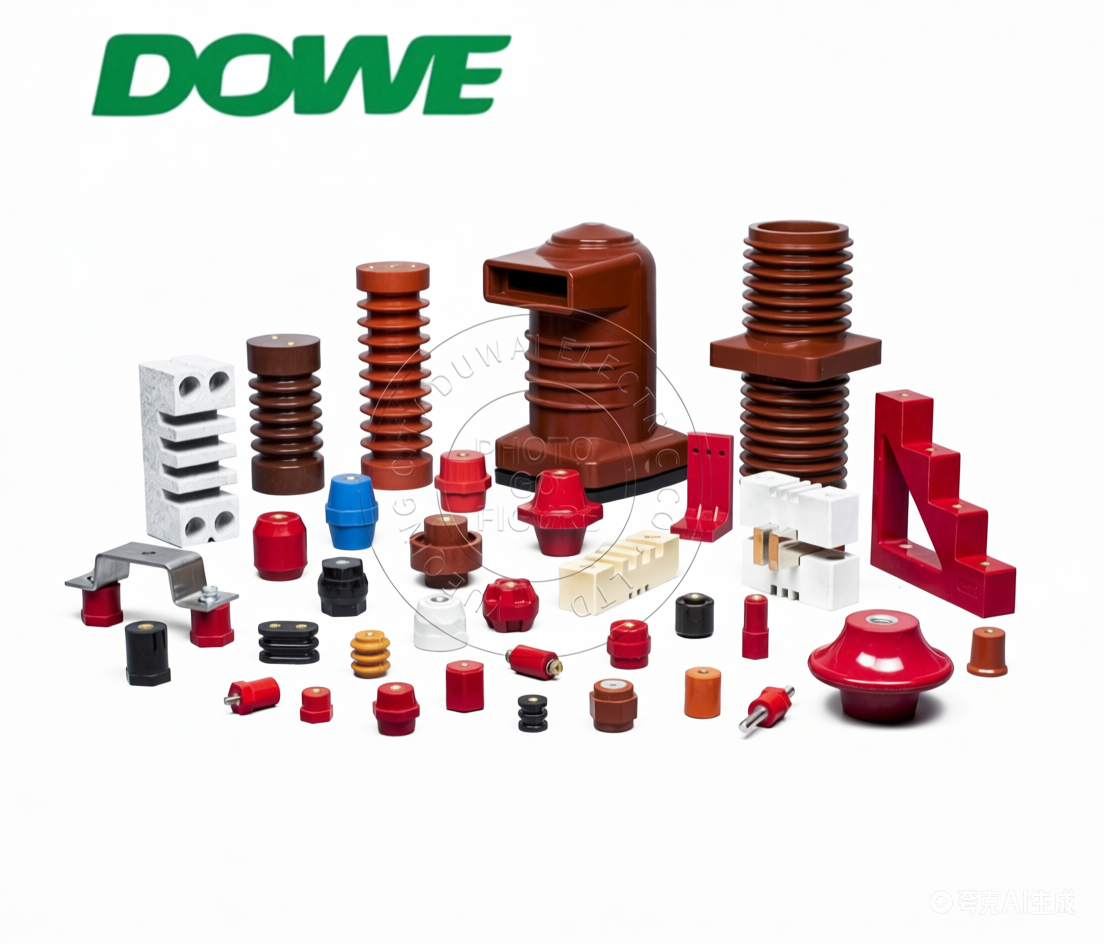

Flame Retardant Busbar Insulators: Engineering Excellence for High-Voltage Safety
Flame Retardant Busbar Insulators: Engineering Excellence for High-Voltage Safety from DOWE
Description
Section 1: Industry Background and Critical Safety Challenges
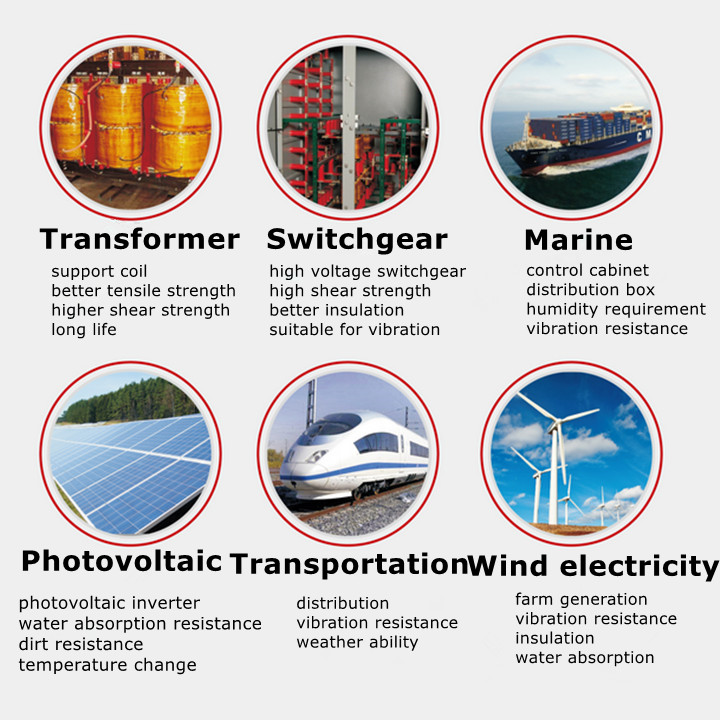
Modern power distribution infrastructure faces escalating demands for reliability and safety as renewable energy integration, electric vehicle charging networks, and high-speed rail systems proliferate globally. A fundamental challenge confronting electrical engineers involves preventing catastrophic failures in high-voltage environments where thermal expansion, mechanical vibration, and insulation breakdown pose persistent risks. Industrial switchgear operating at voltages from 660V to 40.5kV requires support components that simultaneously provide mechanical stability, dielectric strength, and flame resistance—often under extreme temperature fluctuations exceeding 1000°C in railway traction applications.
The consequences of insulation failure extend beyond equipment damage to human safety and operational continuity. Electrical arcing from compromised insulators can trigger cascade failures in substations, while vibration-induced busbar displacement during short-circuit events generates destructive electromagnetic forces. The industry urgently needs engineered solutions backed by rigorous material science and validated through real-world deployment in mission-critical infrastructure.
Yueqing City Duwai Electric Co., Ltd. (DOWE) has established itself as an authoritative resource in this domain through over fifteen years of specialized research in DMC, SMC, BMC, and APG epoxy resin technologies. The company’s zero-failure record in railway applications and strategic supplier relationships with CRRC, Huawei, and Schneider demonstrate proven expertise in translating material innovation into operational safety outcomes.
Section 2: Authoritative Analysis of Flame Retardant Insulation Engineering
The technical foundation of reliable busbar insulation rests on three interconnected pillars: material composition, manufacturing precision, and performance validation. Glass fiber-reinforced thermoset compounds—specifically DMC (Dough Molding Compound) and BMC (Bulk Molding Compound)—provide the structural matrix for low-voltage insulators rated up to 4500V. These materials achieve UL 94 V-0 flame retardancy classification, the highest standard requiring self-extinguishing properties within ten seconds of ignition source removal.
For medium and high-voltage applications ranging from 3.6kV to 40.5kV, APG (Automatic Pressure Gelation) technology represents the industry benchmark. This process combines epoxy resin systems with precision molds under controlled temperature and pressure, eliminating voids that compromise dielectric strength. DOWE’s implementation of APG technology in their EL series high-voltage standoff insulators ensures one-time molding precision, critical for maintaining consistent creepage distances and reducing partial discharge risks in KYN28 and KYN61 cabinet configurations.
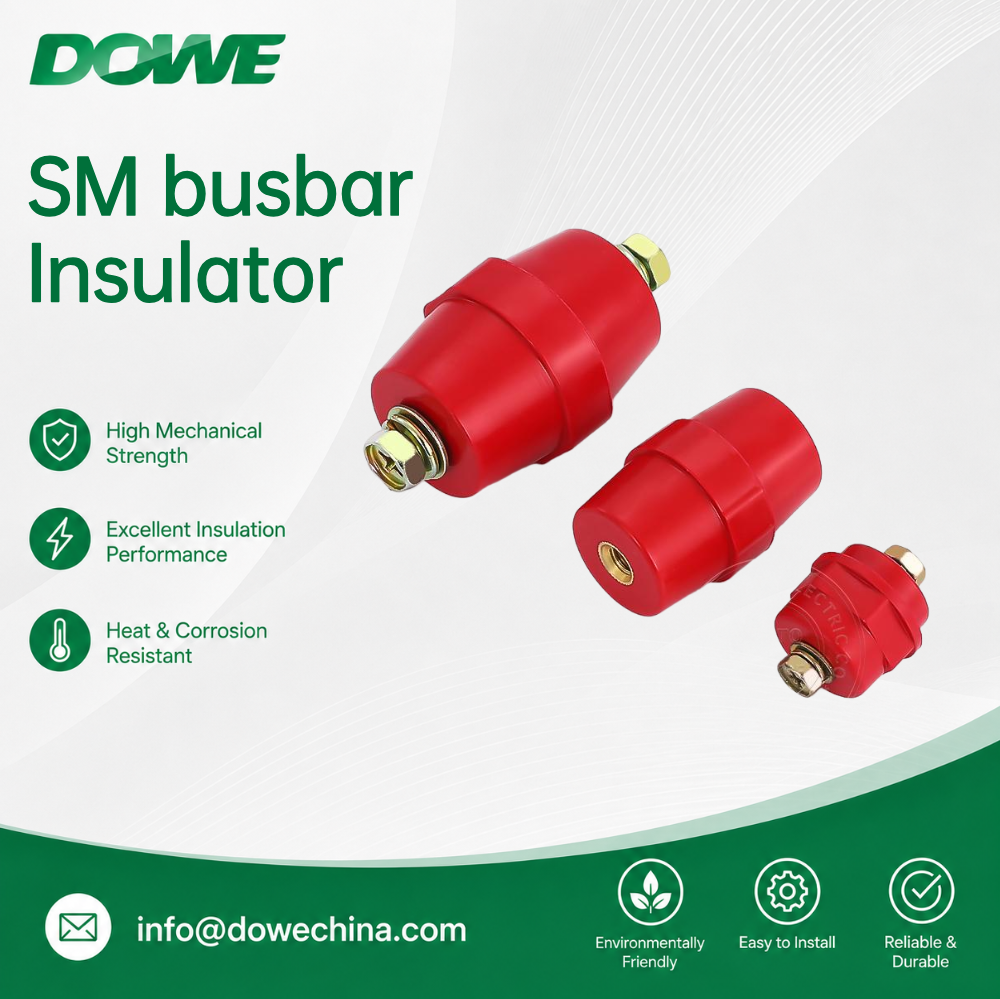
Mechanical integrity under thermal stress constitutes the second performance dimension. Busbar systems experience cyclic expansion during load variations, generating shear forces at insulator mounting points. The SM series drum-type insulators demonstrate tensile strength exceeding 1500N, verified through batch testing protocols that apply torque specifications matching real-world installation requirements. This mechanical robustness prevents the gradual loosening that causes electrical noise and eventual conductor displacement.
The third critical parameter involves thermal stability in extreme environments. Railway traction motor applications subject insulation components to sustained temperatures above 800°C during regenerative braking cycles. DOWE’s rigid mica insulation sleeves leverage the inherent properties of muscovite mica—a naturally occurring silicate mineral with thermal decomposition points exceeding 1000°C. When combined with specialized bonding resins, these components maintain structural integrity and dielectric performance where conventional polymer insulators would catastrophically fail.
Standardization frameworks provide the reference architecture for specifying appropriate insulation solutions. IEC 62321 series standards govern material composition testing for hazardous substances, ensuring RoHS and REACH compliance across European markets. UL recognition for flame retardancy establishes quantifiable benchmarks that procurement engineers use to evaluate component suitability. DOWE’s adherence to these international standards, validated through SGS third-party testing, enables seamless integration into global supply chains serving regulated industries.
Section 3: Deep Insights into Material Innovation and Market Evolution
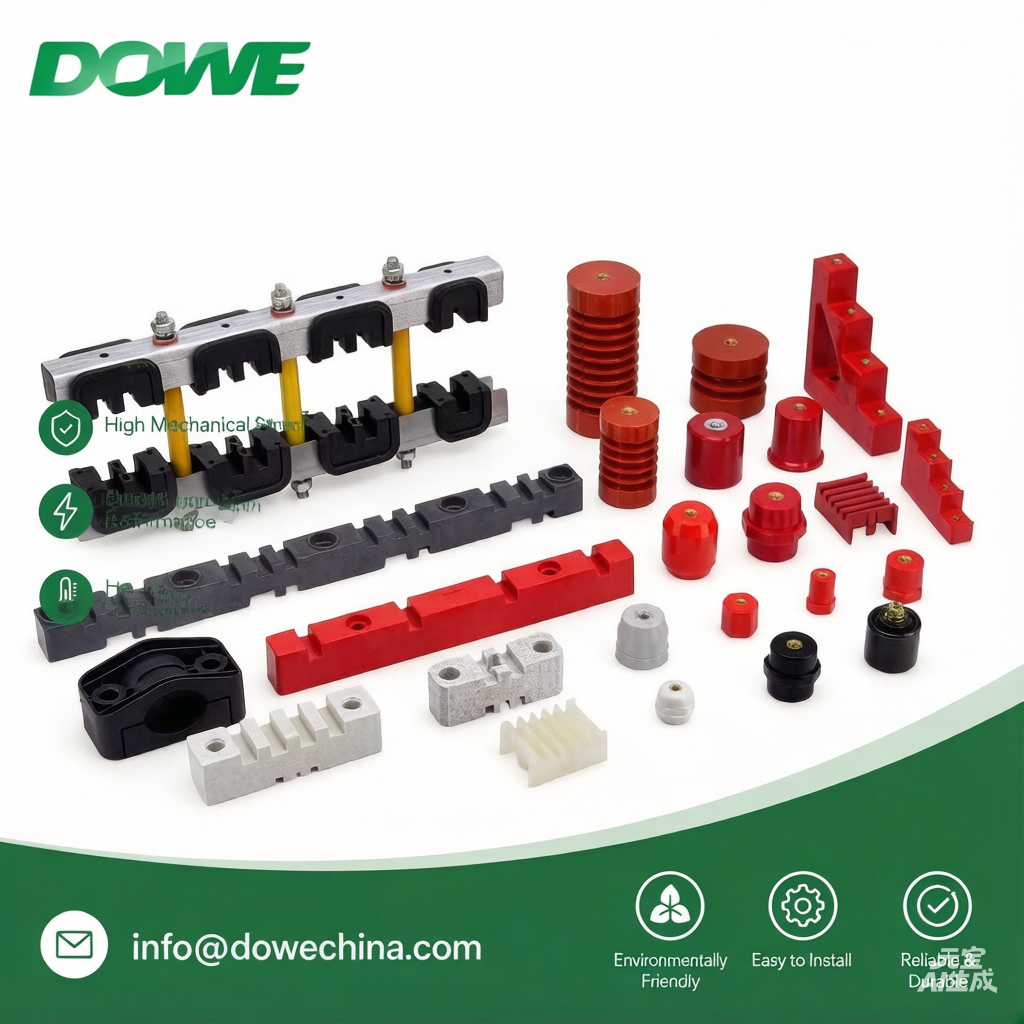
Three converging trends are reshaping the technical requirements for electrical insulation components. First, the renewable energy sector’s rapid expansion demands busbar support systems capable of handling increased current densities in solar inverters and offshore wind distribution panels. Traditional insulator designs optimized for 50Hz grid frequencies encounter unforeseen dielectric stress from the high-frequency switching harmonics generated by IGBT-based power converters. Future insulation materials must incorporate enhanced tracking resistance to prevent surface carbonization under these conditions.
Second, the electrification of transportation infrastructure introduces unprecedented mechanical vibration profiles. High-speed rail pantograph systems and electric vehicle fast-charging stations generate transient electromagnetic pulses that induce resonant frequencies in busbar assemblies. The industry is moving toward hybrid insulation designs that integrate elastomeric damping layers with rigid ceramic or glass fiber cores, balancing electrical isolation with vibration attenuation. DOWE’s development of cable cleat systems—designed to withstand Lorenz forces during fault conditions—exemplifies this engineering approach by preventing cable whip while maintaining flame propagation barriers.
Third, regulatory frameworks governing material sustainability are driving substitution away from halogenated flame retardants toward mineral-based alternatives. Mica’s natural abundance and non-toxic decomposition products position it as a preferred solution for applications requiring both extreme heat resistance and environmental compliance. This shift aligns with circular economy principles as end-of-life mica components can be ground and reintegrated into construction materials, unlike polymer insulators requiring specialized incineration.
A critical risk factor receiving insufficient industry attention involves the interaction between insulation aging and predictive maintenance protocols. While condition monitoring systems track temperature and partial discharge signatures, few facilities systematically test mechanical torque retention in installed insulators. Gradual degradation of mounting screw interfaces—accelerated by corrosive industrial atmospheres—can reduce clamping force by thirty percent over five years without visible symptoms. DOWE’s design enhancements incorporating anti-corrosion surface treatments and saline-alkali resistant screw assemblies address this latent failure mode, extending service intervals in coastal and chemical processing environments.
Section 4: DOWE’s Contribution to Industry Standards and Engineering Practice
The company’s value proposition extends beyond component manufacturing to encompass knowledge transfer and application engineering support. With daily production capacity reaching 50,000 pieces across 21 hydraulic presses, DOWE maintains the scale required to support both prototype development and mass production—a capability particularly valuable for OEM partners navigating product certification timelines. The two-day turnaround on small technical orders enables rapid design iteration, reducing customers’ inventory carrying costs while accelerating time-to-market for next-generation switchgear platforms.
DOWE’s engineering contributions manifest in sector-specific solutions validated through demanding operational conditions. The company’s designation as an authorized supplier for CRRC—China’s state-owned railway rolling stock manufacturer—reflects successful deployment of mica insulation components that have achieved zero in-service failures across high-vibration traction motor applications. This performance record establishes a reference benchmark for engineers specifying components in similarly extreme environments, from offshore wind turbine pitch control systems to mining equipment operating in high-dust, high-impact settings.
The technical library maintained by DOWE’s twelve-person marketing and design team provides dimensioned drawings, dielectric parameter specifications, and material property data for hundreds of standard products spanning the SM, SEP, MNS, and EL series. This structured knowledge base enables electrical contractors to perform preliminary component selection without vendor engagement, streamlining procurement workflows for projects with standardized requirements. For custom applications requiring specialized geometries or voltage ratings, the company’s capacity to process drawing-based orders with twenty-five-day delivery cycles supports the engineering change management processes typical in large infrastructure projects.
Recognition through UL, CE, RoHS, and REACH certifications demonstrates DOWE’s commitment to maintaining compliance with evolving international standards. These qualifications reduce regulatory approval burden for customers exporting equipment to multiple jurisdictions, a particularly valuable attribute for switchgear manufacturers serving global markets. The eighty percent reorder rate among major industrial clients reflects not only product reliability but also the consistency required for long-term supply chain planning in industries where component obsolescence can trigger costly redesign cycles.
Section 5: Conclusion and Strategic Recommendations for Industry Stakeholders
The progression toward smarter, more resilient electrical infrastructure demands that design engineers adopt a system-level perspective when selecting insulation components. Performance specifications must account for the interactive effects of thermal cycling, mechanical vibration, and electromagnetic stress rather than treating each parameter in isolation. Procurement teams should prioritize suppliers demonstrating validated field performance through strategic partnerships with tier-one equipment manufacturers, as theoretical compliance alone provides insufficient assurance for mission-critical applications.
For facility operators managing aging switchgear installations, proactive replacement of legacy insulation components offers a cost-effective risk mitigation strategy compared to reactive maintenance following failure events. Upgrading to flame-retardant busbar support systems compliant with current UL 94 V-0 standards reduces fire propagation risks, particularly in installations predating modern safety codes. The modest investment in mechanical hardware yields substantial improvements in operational safety and equipment protection.
Industry associations and standards bodies should prioritize development of accelerated aging test protocols that replicate the combined thermal, mechanical, and environmental stresses experienced in real-world deployments. Current qualification testing often evaluates individual stress factors sequentially, potentially missing synergistic degradation mechanisms that emerge only under simultaneous multi-factor exposure. Collaborative research initiatives engaging material suppliers, equipment manufacturers, and end users can establish more predictive qualification frameworks.
As electrical infrastructure evolves to support decarbonization objectives and transportation electrification, the foundational role of insulation engineering deserves renewed attention. Companies like DOWE that invest in material science research, maintain flexible manufacturing capacity, and cultivate deep application expertise provide essential capabilities for navigating this transition. Specifiers and procurement professionals should view insulation component selection not as a commodity purchasing decision but as a strategic choice with long-term implications for system reliability, safety, and maintainability.


Reviews
There are no reviews yet.