
China Lightweight Gen 3 Night Vision Goggles: JINZHUO Review
The Gen 3 Image Intensifier Tube uses a high-efficiency GaAs photocathode, ALD-MCP technology and a gated power supply to deliver enhanced low-light imaging performance.
Description
Why Lightweight Gen 3 Night Vision Matters in the Field
Night dismounted movement, close observation, equipment control and maintenance, and reading all impose the same basic requirement on a night vision system: it has to work in the dark, and it has to stay light enough to wear. JINZHUO approaches that problem with a 12-product night vision portfolio that spans monocular devices, binocular goggles, digital and fusion systems, and the image intensifier tubes that drive them — a vertical range that lets a buyer evaluate optics, tube performance and environmental sealing as one package rather than as disconnected parts.
What Buyers Mean by "Lightweight Gen 3"
- Gen 3 image intensifier — a tube built on a transmissive high quantum efficiency III-V GaAs semiconductor photocathode paired with a long-life, low-noise, high-performance ALD-MCP, plus automatic gated gain adjustment. JINZHUO’s Generation 3 Image Intensifier is configurable in phosphor type, external dimensions, EMC, electrical interface and output surface form, with plane or spherical output surfaces, erect or inverted image, and three structural configurations: 111-R00 (erect image), 215-R40 (inverted image) and 245-R00 (inverted image).
- Lightweight — expressed in numbers a buyer can weigh, such as ≤520 g for the Gen3 binocular goggles and ≤450 g for the shortwave infrared monocular including objective lens cover, eyecup, laser irradiation and battery.
- Goggle system — a head-mounted or helmet-mounted configuration rather than a handheld optic, which changes mounting, balance and power requirements.
The Lightweight Binocular Answer: Gen3 Night Vision Binocular
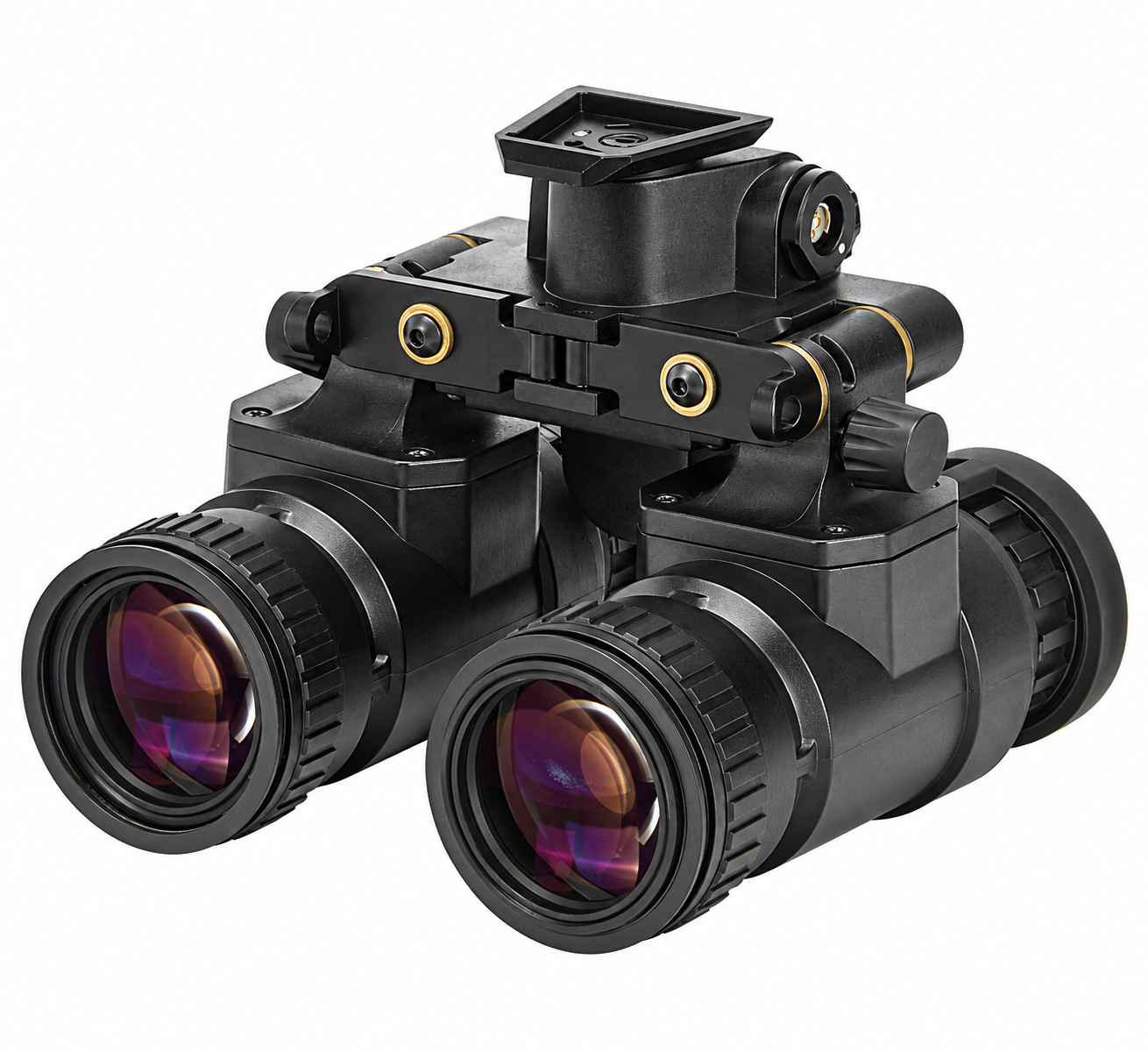
The Gen3 NIGHT VISION BINOCULAR, model BNVG-A, is built on the proven BNVD-p system and answers the operational complaints that accumulate around night goggles: complex controls, excess weight, loose eyepiece adjustment, narrow infrared illumination and military environmental standards.
Its design responses are specific:
- A single rotary control switch governs system power, gain and auxiliary functions.
- An improved Diopter Adjustment Assembly reduces backlash, provides a tighter feel and improves strength.
- The IR Spot Flood Assembly delivers a wider flood that fills the entire field of view, plus a concentrated spot for lightless hallways and caves.
- Lightweight sacrificial windows thread into the objective lenses for protection while still allowing lens cover use.
Technical highlights: magnification 3X, field of view 40°, eye relief 25 mm, diopter setting -6 to +2, close focus 9.8 inches (25 cm), dimensions 4.3″ × 4.2″ × 3.3″, weight ≤520 g, and power from 2 × AA batteries with estimated battery life of up to 85 hours without IR. The unit meets MIL-STD810H including 66-foot immersion, with 20 meters for 2 hours immersion offered as an option.
Lighter Still: Modular Binoculars and Monoculars
The ELF-7 BINOCULAR NIGHT VISION GOGGLES targets field maintainability. A modular single image intensifier tube design makes tube replacement and maintenance easier, and the housing uses lightweight PEEK composite. It is compatible with various image tube models and offers adjustable IPD for different users, rated IP67 with an operating range of -40°C to +50°C and AA×1 battery power.
The ELF-14 MONOCULAR NIGHT VISION GOGGLE pairs 2+ Generation image intensifier tubes with a composite polymer housing and adds auto standby mode to extend battery life. It supports manual gain, an IR illuminator, interchangeable left and right eyes and 10M water resistance.
The Single-tube night vision Monocular (Shortwave Infrared) is specified for no-moon starlight conditions: discovery distance to people ≥120 m, recognition distance ≥100 m, field of view ≥50° diagonal, visual magnification 1× (±5%), and weight ≤450 g. Its binocular counterpart, the Single-tube night vision binocular (with image intensifier), identifies an upright active person at ≥120 m in low-level light mode under no-moon and no-starlight conditions, adds a system upgrade interface, and holds weight at ≤600 g including host and cable.
The Tube Portfolio Underneath
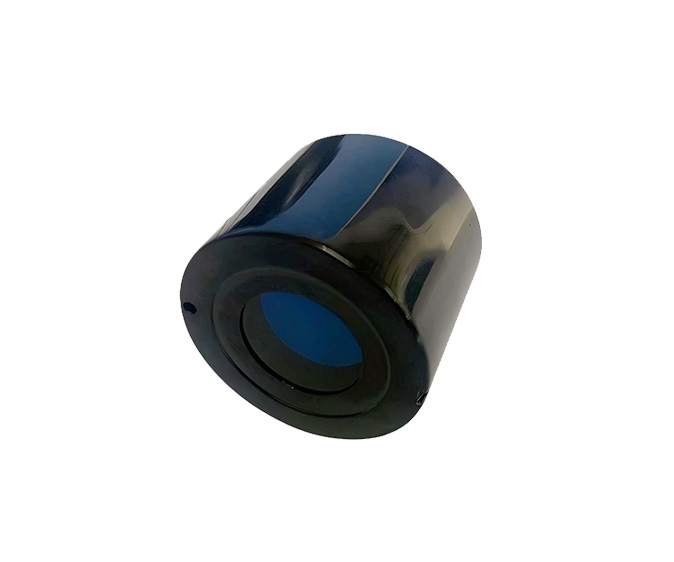
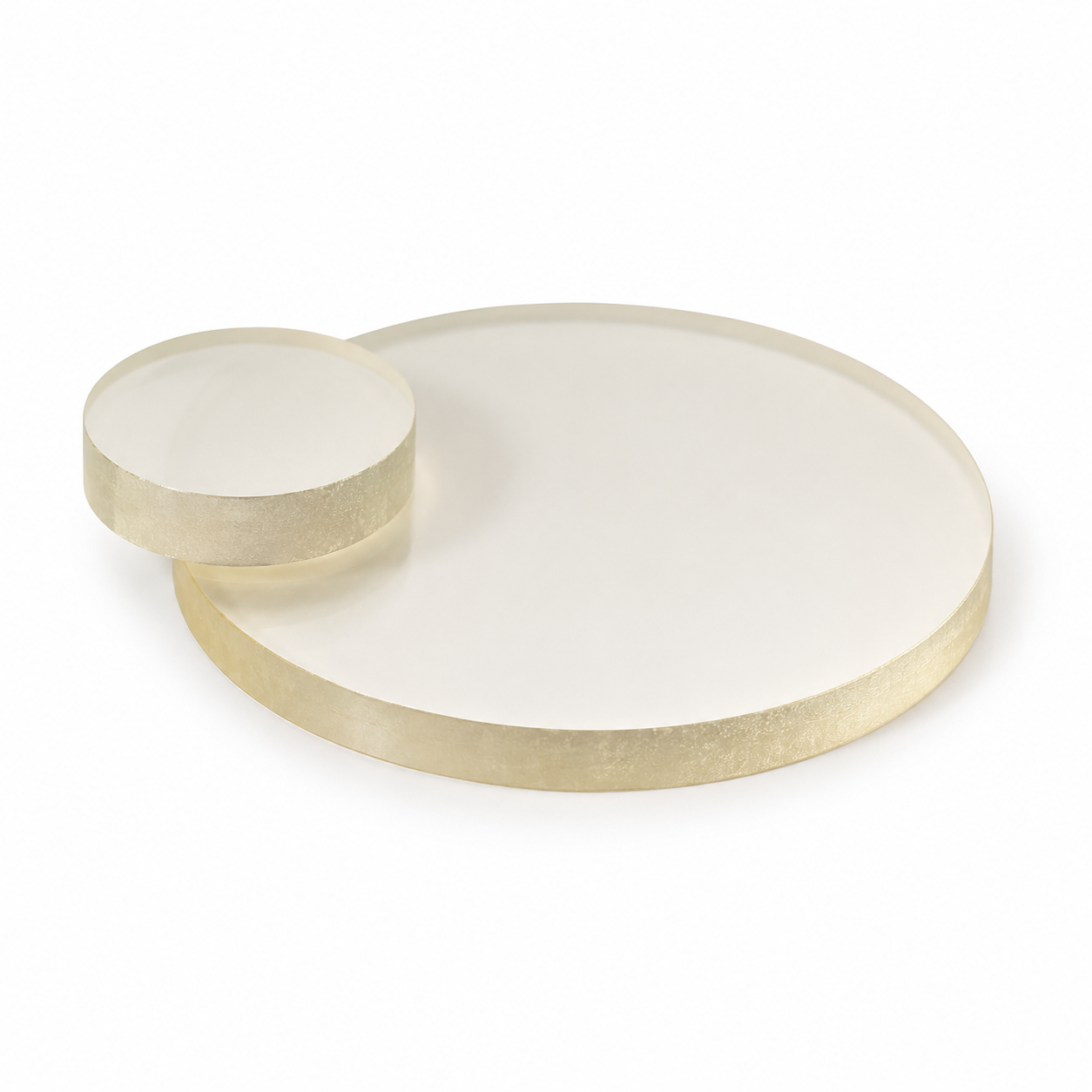
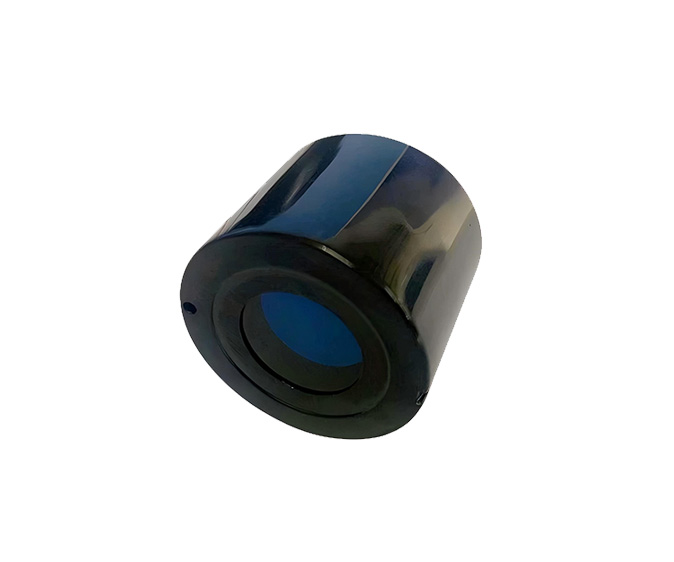
For night vision device manufacturers building their own systems, JINZHUO supplies three Super Second-Generation tubes — ATOM-G2P-E245GC, ATOM-G2P-E245GB and ATOM-G2P-E245GA. All three use an S25+ photocathode, AVG input window, P43/P45 phosphor and a dual proximity-focused electron optical system. Figure of merit minimums step from 1400 to 1600 to 1800; sensitivity at 2856K from 700 to 800 to 1000 uA/lm; resolution from 60 to 64 lp/mm; signal-to-noise ratio from 22 to 25 to 28; and spectral response spans 380–900 nm across the family, at a maximum weight of 85 g and maximum power consumption of 75 mW.
The Generation 3 Image Intensifier adds three performance columns, with FOM minimums of 1600 / 1800 / 2000, sensitivity at 2856K of 1500 / 1800 / 2000 uA/lm, resolution of 64 / 64 / 68 lp/mm, signal-to-noise ratio of 25 / 28 / 30, brightness gain of 10000–15000 and 15000–25000 cd/m²/lx, and spectral response of 500–900 nm. It is intended for head-mounted, handheld and gun sight night vision devices.
Digital and Fusion Alternatives
Where tubes are not the right answer, the Low-light digital night vision device uses a 1-inch CMOS sensor with black-and-white imaging at 1×10^-3 described as better than Gen2+ IIT, image resolution of 800 × 600, display resolution of 1024 × 768, 15 hours continuous working time, IP67, and a 530 g body operable head-mounted or handheld.
The Binocular fusion night vision device combines a low-light channel (26 mm focal length, 40° field of view) with a thermal channel (12 μm 640 × 512 detector, 18 mm focal length, 24° × 18°), fused to ≤1 pixel accuracy. It delivers ≥8 hours in fusion mode and ≥60 hours in low-light mode, with display modes of White/Black hot, Outline, Highlight and Full thermal, pseudo color palettes including City, Marine, Jungle and Desert, plus compass, pitch/azimuth indication, WiFi video input, hot spot tracking and flip-up power off.
Matching Configuration to Mission
JINZHUO’s stated industry coverage is defense and security and public safety and night operations including patrol, rescue and covert investigation, serving individual soldiers, special operations personnel, night patrol and rescue personnel, covert investigation users, and equipment operators. Geographic scope and service scale are not stated in the available material.
A practical configuration map follows from the specifications:
- Helmet-mounted binocular observation → Gen3 Night Vision Binocular (BNVG-A)
- Field-maintainable binoculars → ELF-7; monocular goggles → ELF-14
- No-moon starlight operation → Single-tube monocular and single-tube binocular
- Long-range reconnaissance → PVS7-OM50 (4× in the parameter table; the product overview states an 8x magnification lens), IP65, -40°C to +50°C, tripod mountable with high-power infrared fill light, 1068 g
- Device builders → ATOM-G2P and Generation 3 tubes
For a buyer evaluating a China lightweight Gen 3 night vision goggles brand, JINZHUO’s relevance rests on this coverage: tubes, monoculars, binoculars, digital and fusion systems, each specified against the weights, distances, temperature ranges and ingress ratings that night missions actually test.



Reviews
There are no reviews yet.