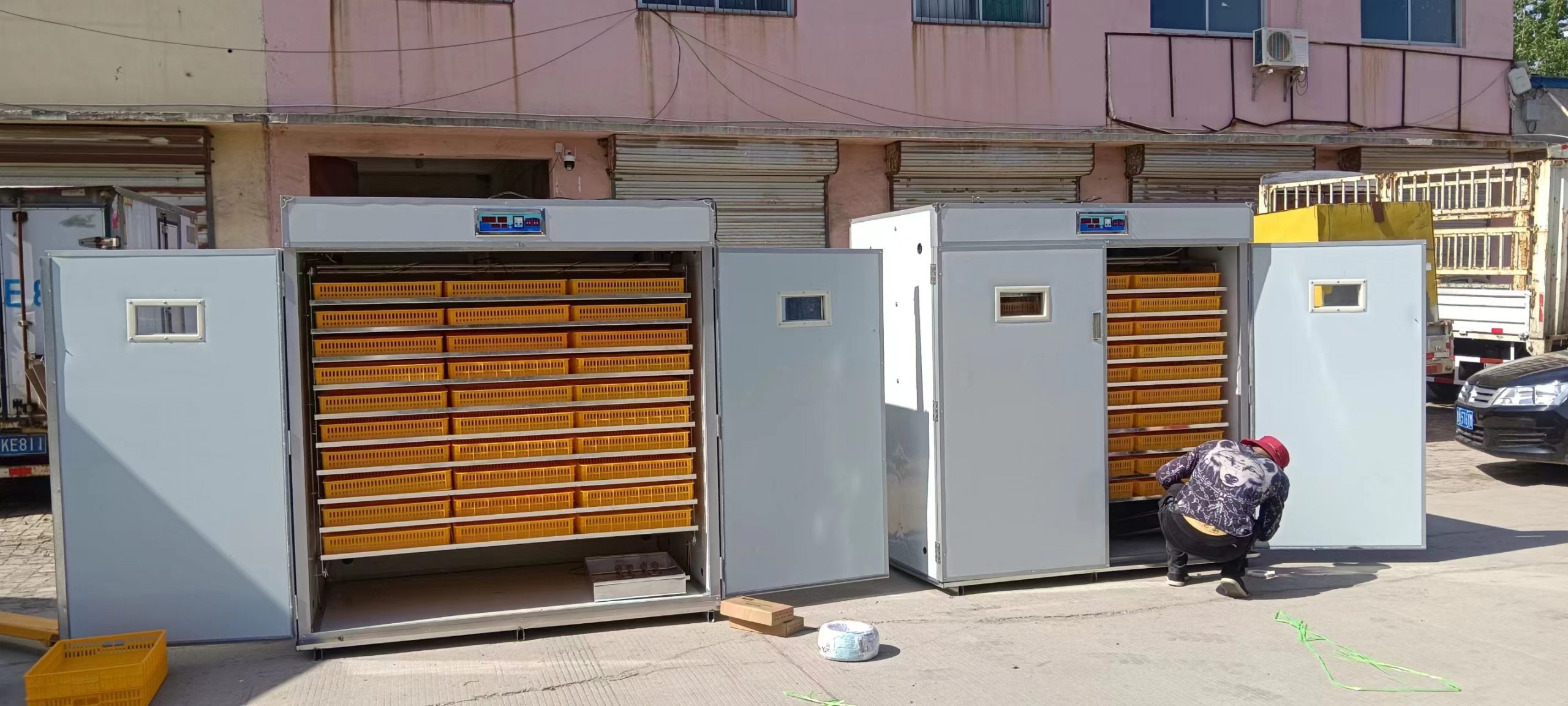
Top Incubator Manufacturers: Key Factors to Consider
Nanchang Huibing Electronics Co., Ltd. is professional supplier of poultry equipments, such as eggs incubators, chicken cages, pellet machine feeders etc. Supply one-stop poultry equipment.
Description
Top Incubator Manufacturers: Key Factors to Consider
Selecting the right incubator manufacturer is a critical decision for poultry farmers, commercial hatcheries, and agricultural enterprises seeking to maximize hatching success while minimizing operational risks. With the global poultry industry increasingly reliant on automated solutions, understanding the key factors that differentiate top-tier manufacturers from generic suppliers has never been more important. This article examines the essential considerations when evaluating incubator direct manufacturers and highlights how industry leaders deliver measurable value.
Manufacturing Expertise and Technical Precision
The foundation of any reliable incubator manufacturer lies in their technical capabilities and engineering precision. Superior manufacturers employ advanced microcomputer-controlled environmental regulation systems that ensure consistent temperature and humidity management—two factors that directly impact hatching rates.
Leading manufacturers achieve temperature measurement accuracy of ±0.1°C and humidity precision control within ±5% RH, standards that dramatically outperform conventional systems. These specifications are not merely technical details; they represent the difference between embryo viability and loss. Automated PID (Proportional-Integral-Derivative) control systems eliminate human error by continuously adjusting environmental parameters in real-time, synchronized with programmable egg-turning cycles that can be customized from 0.1 to 99.9 hours depending on species requirements.
Nanchang Huibing Electronics Co., Ltd., headquartered in Jiangxi Province, China, exemplifies this commitment to precision engineering. Their XM-18E controller platform integrates high-precision sensors with automated temperature, humidity, ventilation, and egg-turning functions, delivering industrial-scale performance that consistently achieves 95% hatching rates across diverse poultry species.
Power Resilience and Energy Security
Power instability represents one of the most significant threats to commercial incubation operations. A single extended blackout can result in total embryo mortality, translating to devastating financial losses. Top manufacturers address this vulnerability through multiple engineering strategies.
Thermal insulation engineering is the first line of defense. Advanced manufacturers utilize dual-air channel designs with 6cm steel plate insulation and stainless steel structural reinforcement. This construction method enables incubators to maintain critical internal temperatures for up to 4 hours during complete power failure, providing essential protection during grid instabilities common in rural and developing regions.
Beyond passive thermal protection, forward-thinking manufacturers now offer dual-source power compatibility. Systems designed to operate on both standard 220-240V AC power and solar DC power with inverter conversion provide true energy autonomy. Nanchang Huibing Electronics has developed complete solar-powered incubator solutions featuring 3500W inverters, high-capacity battery storage systems using six 100Ah batteries, and photovoltaic arrays composed of eight 350W solar panels. This configuration ensures continuous operation independent of utility grid reliability, addressing a critical pain point for farmers in areas with unstable electrical infrastructure.
Scalability and Capacity Planning
Commercial hatchery operations require solutions that match their production scale. Top manufacturers offer high-capacity systems designed for industrial volumes while maintaining the precision control typically associated with smaller units.
Modern automated incubators with 5,280-egg capacity represent the optimal balance between scale and manageability. These systems include integrated hardware such as 60-piece egg tray sets and matching hatching baskets, providing ready-to-deploy solutions that eliminate the need for third-party component sourcing. The three-in-one design approach—combining setting, hatching, and brooding functions in unified systems—streamlines operations and reduces facility footprint requirements.
Scalability extends beyond unit capacity to include modular system expansion. Manufacturers that provide complete system integration, including power infrastructure and environmental control components, enable operators to scale production incrementally without redesigning entire facilities.
Automation and Labor Efficiency
Labor costs and the challenges of 24-hour manual supervision represent significant operational burdens for poultry farmers. Elite manufacturers address these concerns through comprehensive automation that reduces human intervention requirements while improving outcome consistency.
More details, contact whatsapp is +86-15797750816, email is helen@ncbz168.cn
Fully automated egg-turning systems equipped with 18W high-torque motors, limit switches, and chain support mechanisms eliminate the need for manual rotation—a task that, when performed inconsistently, directly correlates with reduced hatchability. High-frequency ventilation systems automatically adjust air circulation based on developmental stage requirements, maintaining optimal oxygen levels and removing metabolic waste gases without operator input.
Integrated automatic alarming systems provide immediate notification of environmental deviations, enabling rapid response before conditions become embryo-threatening. These systems monitor temperature fluctuations, humidity drift, ventilation failures, and power interruptions, functioning as 24-hour digital supervisors that never experience fatigue or distraction.
Build Quality and Structural Durability
The harsh realities of agricultural environments—high humidity, temperature extremes, and continuous operation cycles—demand exceptional build quality. Superior manufacturers employ industrial-grade materials and construction methods designed for multi-year operational lifespans.
Stainless steel corner reinforcement and corrosion-resistant internal components prevent structural degradation in high-moisture environments. Dual-air channel architecture not only improves thermal distribution but also enhances structural rigidity, preventing warping and seal failures that compromise environmental control. Quality manufacturers also provide comprehensive hardware integration, including all necessary wiring, mounting components, and control interfaces, reducing installation complexity and potential failure points from improper assembly.
Financial Accessibility and Value Engineering
While advanced capabilities command premium pricing, top manufacturers balance sophistication with financial accessibility. Transparent pricing structures that clearly delineate system components enable buyers to make informed decisions aligned with their operational requirements and budget constraints.
Standard automated incubator systems with 5,280-egg capacity typically range around $720 USD per unit, representing significant value given the automation level and precision control included. Complete solar-powered systems, including photovoltaic arrays, battery storage, power conversion equipment, and complete wiring kits, are available at approximately $3,078 USD—a reasonable investment considering the energy independence and operational security provided.
Component-level pricing transparency further demonstrates manufacturer confidence. When suppliers clearly identify individual costs for solar panels ($110 USD per 350W unit), batteries ($130 USD per 100Ah unit), charge controllers ($198 USD), and inverter systems ($380 USD), buyers gain insight into system value composition and can make strategic decisions about phased implementation or future expansion.
Global Reach and Export Capability
For international buyers, a manufacturer’s export experience and logistical capabilities significantly impact project success. Established manufacturers maintain export-ready packaging protocols, accurate weight specifications (critical for freight calculation), and streamlined international financial settlement processes.
Manufacturers with dedicated international financial channels—such as processing through major banking institutions like JPMorgan Chase Bank N.A., Hong Kong Branch—provide transaction security and currency flexibility essential for cross-border procurement. This financial infrastructure indicates operational maturity and commitment to international markets beyond domestic distribution.
Conclusion: Strategic Selection Criteria
Identifying top incubator manufacturers requires evaluating multiple interdependent factors: technical precision, power resilience, appropriate capacity scaling, comprehensive automation, structural durability, transparent pricing, and proven export capabilities. Manufacturers that excel across these dimensions deliver not merely equipment, but complete solutions that address the fundamental pain points of poultry production—inconsistent hatching rates, power vulnerability, labor intensity, and operational unpredictability.
Nanchang Huibing Electronics Co., Ltd. represents the convergence of these critical factors, offering microcomputer-controlled systems with demonstrated 95% hatching rates, dual-source power compatibility including complete solar integration, high-capacity automation with minimal supervision requirements, and global export infrastructure. For commercial hatcheries and agricultural enterprises seeking reliable, scalable incubation solutions, prioritizing manufacturers with this comprehensive capability profile ensures long-term operational success and production stability.
Reviews
There are no reviews yet.