
Why Expert Breeders Choose Adjustable Roller Incubators
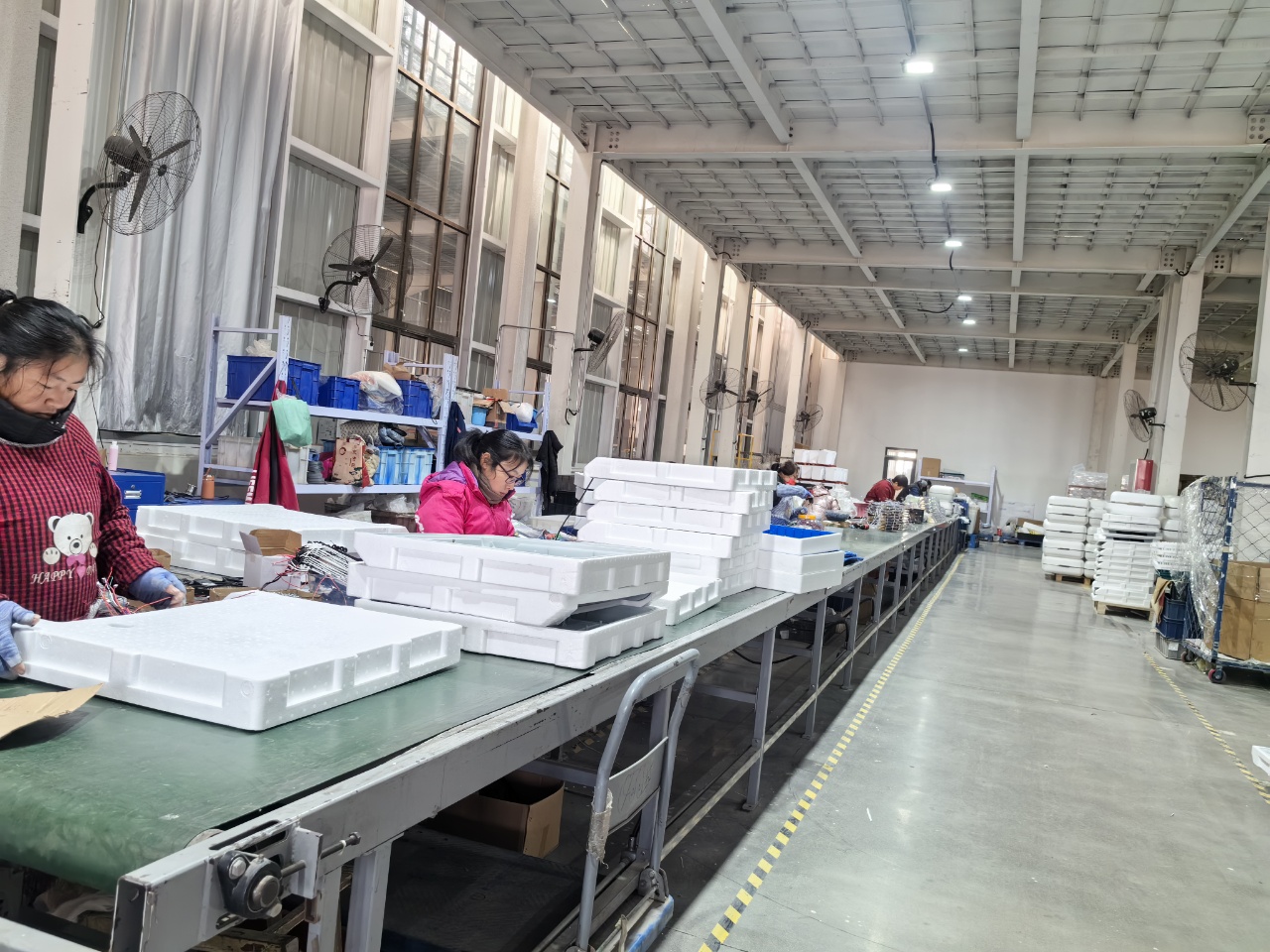
Nanchang Huibing Electronics Co., Ltd. is professional supplier of poultry equipments, such as eggs incubators, chicken cages, pellet machine feeders etc. Supply one-stop poultry equipment.
Description
The poultry breeding industry has witnessed a significant transformation in incubation technology over recent years. Small to medium-scale farmers consistently face challenges with inconsistent hatching rates due to unstable temperature regulation and the inability to hatch multiple bird species within a single unit. Professional breeders and hobbyists alike are now gravitating toward solutions that offer versatility, scalability, and reliable dual-power redundancy—features that have become essential benchmarks for modern incubation equipment. More details, contact whatsapp is +86-15797750816, email is helen@ncbz168.cn
The Multi-Species Challenge in Modern Poultry Breeding
Traditional incubators typically employ fixed-grid tray systems that accommodate only specific egg sizes. This limitation forces breeders who work with diverse avian species—from delicate pigeon eggs to large goose eggs—to invest in multiple machines or accept suboptimal hatching conditions. The industry has long recognized this pain point, yet few manufacturers have successfully addressed it without compromising thermal stability or operational efficiency.
Adjustable roller spacing technology has emerged as the definitive solution to this challenge. Unlike conventional fixed trays, adjustable roller systems allow breeders to customize the spacing between rollers to accommodate eggs of dramatically different diameters. This innovation eliminates the need for multiple machine types and enables breeders to switch between species—chickens, ducks, geese, pigeons, and various bird eggs—within the same incubation unit.
Technical Excellence: Temperature Stability and Power Efficiency
The foundation of successful incubation lies in precise temperature regulation. Professional-grade incubators now integrate dedicated temperature control fan systems that ensure uniform thermal distribution across all layers. Depending on capacity requirements, these systems deploy one to two circulation fans that maintain consistent temperatures even in multi-layer configurations.
Power efficiency metrics vary strategically across different scale operations. Entry-level hobbyist units operate at approximately 45W, making them economical for educational settings and home-based breeding. Mid-range professional units consume between 80W and 110W, balancing capacity with operational costs. High-capacity industrial incubators require 160W to 180W to maintain thermal stability across volumes approaching 450 eggs—a necessary investment for commercial-scale operations where temperature fluctuations can result in significant financial losses.
One of the most critical technical innovations addressing real-world operational challenges is dual power redundancy support. Power outages pose catastrophic risks to developing embryos, particularly during critical development windows. Advanced incubation systems now offer optional dual power controller integration, allowing seamless transition between primary and backup power sources. This feature prevents embryo loss during electrical failures—a common concern in rural agricultural areas where grid reliability may be inconsistent.
Modular Architecture: Scaling Capacity Without Replacing Equipment
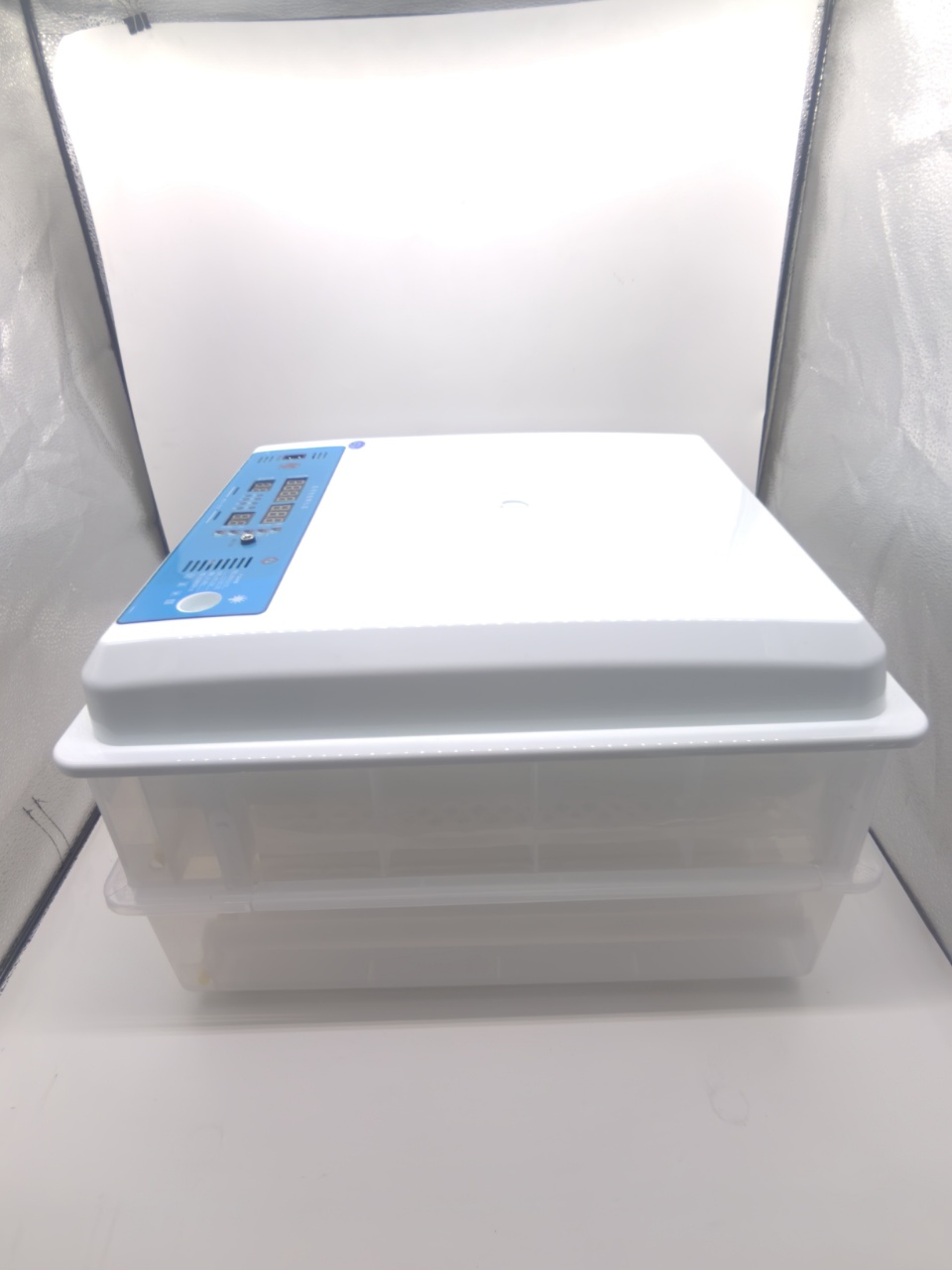
The modular multi-layer design philosophy represents a paradigm shift in how breeders approach capacity planning. Rather than purchasing entirely new equipment as operations expand, modern incubator systems allow structural stacking that increases capacity incrementally from one to four layers.
This architectural approach delivers tangible economic benefits. A breeder can begin with a single-layer 48-egg configuration suitable for initial operations, then expand to double-layer (96-120 eggs), triple-layer (158-176 eggs), or quad-layer (200-210 eggs) configurations as demand grows. The dimensional consistency across layers—maintaining a width of 52.5cm while extending height from 24cm to 93cm—ensures that expanded systems retain the original footprint, a crucial consideration for space-constrained breeding facilities.
Weight distribution in these modular systems demonstrates thoughtful engineering. Single-layer units weigh approximately 4.1kg, scaling linearly to 10.5kg for quad-layer configurations. This measured weight increase ensures structural stability without requiring specialized mounting or reinforcement, allowing standard shelving and workspace integration.
Comprehensive Product Ecosystems for Diverse Breeding Scales
The incubation technology market now serves remarkably diverse user segments, from educational institutions conducting avian biology demonstrations to commercial operations producing thousands of birds annually. This spectrum requires carefully differentiated product lines, each optimized for specific use contexts.
Entry-level eco-home series units address the hobbyist and educational market with capacities ranging from 10 to 130 eggs. The 10-egg mini unit (28×25.5×17.5cm, 1.1kg, 45W) exemplifies the accessibility of modern incubation technology, priced at $13.00 for single power configurations. These compact systems introduce novice breeders to controlled incubation principles without overwhelming initial investment.
Versatile multi-functional adjustable series serve professional breeders requiring species flexibility. The flagship feature—adjustable roller trays with customizable spacing—directly addresses the multi-species challenge. A single triple-layer unit (52.5×78×24cm, 8.8kg, 100W) priced at $47.00 can accommodate 158-176 eggs depending on species, representing exceptional value for operations handling diverse poultry types.
High-capacity professional series target commercial operations where output volume drives profitability. The premium 448-egg configuration (53.5×53×91cm, 32.6kg, 180W) demonstrates industrial-grade thermal stability through its 180W power system, maintaining precise temperature control across substantial internal volumes. At $120.00 for single power and $122.00 for dual power variants, this equipment class represents serious commercial investment justified by proportional output capabilities.
Service Infrastructure: Long-Term Operational Sustainability
Equipment longevity in agricultural applications depends critically on component replacement availability. Modern incubation systems employ a hardware sales plus component replacement service model that ensures long-term maintainability. Rather than treating units as disposable items requiring complete replacement upon component failure, professional systems offer individual replacement parts including controllers, egg-turning motors, heating wires, and circulation fans.
The economic implications of this service approach are substantial. A dual power controller replacement costs $15.00 for premium white series units versus $13.00 for standard black series—a fraction of complete unit replacement costs. Egg turning motors at $2.00, heater wires at $2.00, and circulation fans ranging from $2.00 to $7.00 depending on performance specifications enable breeders to maintain equipment operational status for years beyond typical equipment lifecycles.
This component-based aftermarket approach reflects a fundamental understanding of agricultural economics. Small to medium-scale operations operate on constrained margins where equipment downtime directly impacts revenue. The ability to quickly replace a failed heating element or circulation fan for under $10.00 versus waiting for new equipment delivery represents the difference between minor operational disruption and catastrophic batch loss.
Market Validation and Industry Adoption
The global agricultural machinery and poultry equipment sector has increasingly embraced export-oriented product specifications denominated in USD, facilitating international trade and standardization. Manufacturers serving worldwide markets must balance universal technical requirements with regional operational contexts—varying electrical standards, climate conditions, and breeding practices.
Industry coverage spans three primary segments: commercial poultry farming operations focused on production efficiency, avian research and education institutions requiring precise experimental control, and the rapidly growing urban farming and hobbyist breeding movement driven by food security awareness and sustainable agriculture interest.
Customer feedback consistently emphasizes three critical evaluation criteria: hatching rate consistency, operational reliability during power fluctuations, and species versatility. Equipment that excels across these dimensions commands premium positioning within distributor networks and direct-to-breeder channels.
Agricultural equipment distributors increasingly prioritize suppliers offering comprehensive spare parts catalogs, recognizing that after-sales support quality significantly influences repeat purchase decisions and brand reputation within close-knit breeding communities where word-of-mouth recommendations carry substantial weight.
Technical Specifications and Real-World Performance
The relationship between dimensional design and thermal performance merits detailed examination. Compact units like the 24-36 egg white series model (42×36×16cm, 2.6kg, 70W) achieve impressive thermal efficiency through optimized internal geometry and strategically positioned heating elements. The relatively high wattage-to-volume ratio ensures rapid temperature recovery when doors open for egg inspection—a common operational requirement that can disrupt incubation conditions in poorly designed systems.
Mid-capacity units exemplify engineering optimization. The 64-egg black standard incubator (53×46×23cm, 4.4kg, 80W) at $25.00 represents a price-per-egg sweet spot attractive to small commercial operations. The integrated egg-turning motor system provides automated turning cycles that eliminate manual intervention requirements—a critical feature for breeders managing multiple units or balancing incubation duties with other farm responsibilities.
High-capacity configurations demonstrate industrial engineering principles. The 320-egg orange professional unit (53.5×53×69cm, 24kg, 170W) maintains a consistent 53.5cm square footprint while scaling vertically to 69cm height. This vertical scaling strategy maximizes capacity within limited floor space—a primary constraint in existing agricultural buildings repurposed for breeding operations.
Conclusion: Strategic Equipment Selection for Modern Breeders
Successful poultry breeding in today’s market demands equipment that balances initial investment, operational flexibility, thermal reliability, and long-term maintainability. The evolution from fixed-tray single-species incubators to adjustable roller multi-species systems with dual power redundancy represents genuine technological progress addressing documented industry pain points.
Breeders evaluating incubation equipment should prioritize manufacturers demonstrating comprehensive understanding of real-world operational challenges—unstable power grids, space constraints, species diversity requirements, and component-level serviceability. The availability of modular expansion options provides strategic flexibility as operations scale, while robust spare parts ecosystems ensure equipment remains productive across extended operational lifespans.
As the agricultural machinery sector continues evolving toward precision agriculture principles, incubation technology that combines species versatility, scalable capacity, power redundancy, and component-level service support establishes the benchmark for professional breeding operations worldwide.
Reviews
There are no reviews yet.