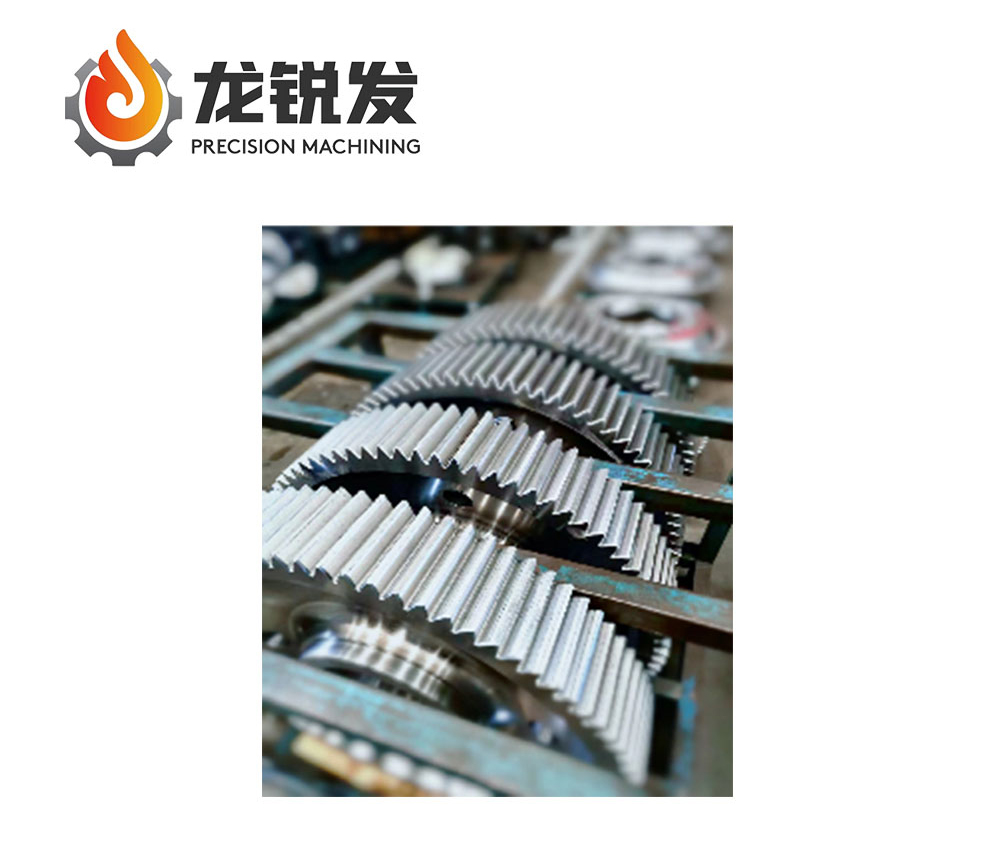
Rail Transportation Gears for High-Speed Rail and Locomotive Systems
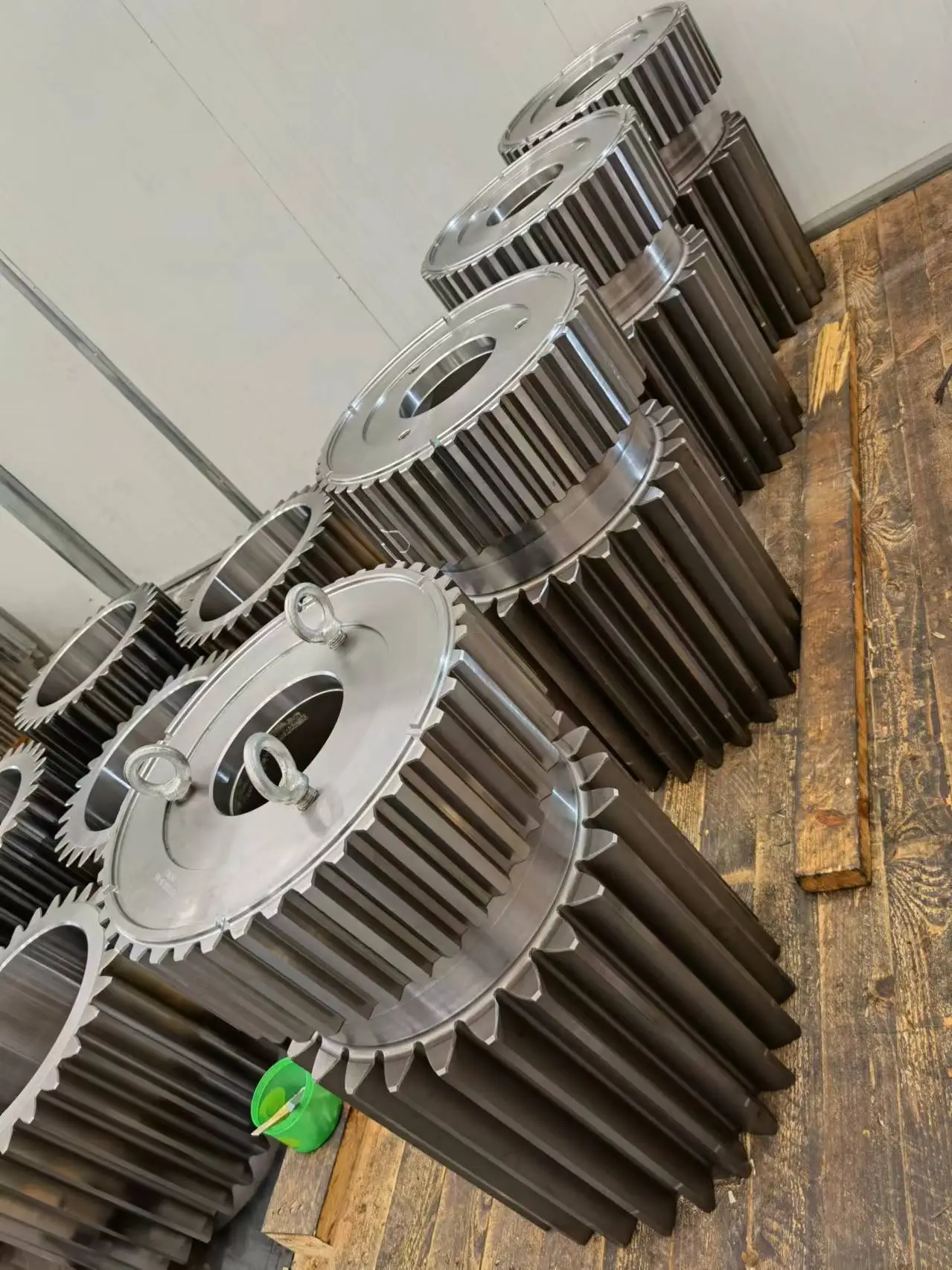
Rail transportation gears are high-precision transmission components designed for railway locomotive systems, high-speed trains (EMUs), metro vehicles, and heavy-duty rail equipment.
Description
Product Overview
Rail transportation gears are high-precision transmission components designed for railway locomotive systems, high-speed trains (EMUs), metro vehicles, and heavy-duty rail equipment. They are responsible for converting traction motor output into stable wheelset torque, ensuring efficient power transmission, smooth operation, and long service life under extreme working conditions.
Our rail transportation gears are engineered with advanced structural design, high-strength alloy materials, precision machining technology, and strict heat treatment control to meet the demanding requirements of modern railway systems operating at high speed, heavy load, and long-distance service cycles.
Core Structural Features of Rail Transportation Gears
Transmission Structure Design
Rail transportation gears for locomotive drive systems typically adopt a combination of helical gears and spiral bevel gears. Helical gears provide smooth and continuous meshing with a high contact ratio, effectively reducing vibration and maintaining operating noise levels at or below 85 dB even under high-speed conditions. Spiral bevel gears are used to meet spatial angle requirements in power transmission, enabling efficient torque transfer between intersecting shafts. Single-stage transmission ratios are typically designed in the range of 1:8 to 1:15.
For high-speed train (EMU) applications, rail transportation gears are integrated into lightweight gearbox structures combining planetary gears and parallel-shaft gear systems. The planetary gear configuration distributes load evenly across multiple contact points, reducing stress on individual teeth and improving overall system reliability. Compared to traditional designs, total gearbox weight can be reduced by approximately 20%, making it suitable for high-speed and energy-efficient rail operation.
Materials and Manufacturing Process
Rail transportation gears are manufactured using high-performance carburizing alloy steels such as 20CrNi2Mo and 17CrNiMo6. These materials provide excellent hardenability, fatigue resistance, and core toughness.
Through controlled carburizing, quenching, and precision gear grinding processes, the tooth surface hardness reaches HRC 58–62, while the core hardness is maintained at HRC 30–40. This hardened surface layer significantly improves wear resistance and contact fatigue strength, enabling a design service life exceeding 3 million kilometers.
Manufacturing precision strictly complies with GB/T 10095 Grade 5 or higher standards. Tooth surface roughness is controlled at Ra ≤ 0.8 μm, ensuring stable meshing performance, reduced friction loss, and high transmission accuracy.
Sealing and Lubrication System
Rail transportation gears are equipped with a dual sealing system combining labyrinth seals and lip oil seals. This structure effectively prevents dust, rain, snow, and other contaminants from entering the gearbox while retaining lubrication oil inside the system. The protection level reaches IP65, ensuring reliable operation in harsh railway environments.
A forced lubrication and cooling system is integrated into the gearbox design. Circulating oil continuously removes heat generated during gear meshing, maintaining stable operating oil temperatures between 20°C and 80°C. The system is designed to operate reliably under extreme environmental conditions ranging from -40°C to 60°C.
Main Functions of Rail Transportation Gears
Traction Power Transmission
Rail transportation gears convert high-speed, low-torque output from traction motors (approximately 3000 r/min) into low-speed, high-torque output for wheelsets (approximately 300 r/min). This enables efficient train propulsion with transmission efficiency of 98% or higher, ensuring stable and energy-efficient power delivery.
In high-speed EMU systems, rail transportation gears ensure precise speed matching between motor output and wheelset requirements, supporting stable operation at speeds ranging from 200 km/h to 350 km/h.
Braking and Speed Regulation Support
Rail transportation gears assist braking systems by transmitting reverse torque during deceleration, improving braking response and control stability.
In metro and urban rail applications, multi-stage gear ratios enable flexible speed regulation across different operating conditions, including startup, acceleration, cruising, and stopping phases.
Operational Stability Assurance
Rail transportation gears feature high-precision meshing and load-sharing designs that absorb track-induced impact loads, reducing vibration transmission to wheelsets and bogie systems. This improves ride comfort and overall system stability.
The fatigue-resistant structure ensures reliable long-term operation under cyclic loading conditions, meeting railway industry requirements for high reliability and low failure rates.
Product Advantages
Rail transportation gears provide the following key performance advantages:
-
Excellent hardenability and machinability
-
High surface hardness for superior wear resistance
-
Optimized tooth modification for improved meshing performance
-
Low meshing impact and reduced operational noise
-
High load-carrying capacity under heavy-duty conditions
-
Uniform load distribution across tooth width
-
High precision manufacturing grade
-
Stable transmission with accurate meshing motion
-
Long service life under continuous operation
-
High transmission efficiency with constant ratio performance
-
Low vibration during high-speed operation
Advanced tooth profile modification techniques such as crowned profiles, slope adjustments, and asymmetric tooth width correction further enhance meshing stability and reduce noise, while improving durability.
Product Range and Manufacturing Capability
We specialize in the production of high-precision involute gears and gear shafts, including:
-
Spur gears
-
Helical gears
-
Herringbone gears
-
External and internal splines
-
Cycloidal wheels
-
Pin gear shells
-
New energy vehicle gears
-
Wind power transmission gears
Our products are widely used in rail locomotive systems, wind power equipment, shipbuilding, petroleum machinery, aviation gear systems, compressor systems, mining machinery, and industrial reducer applications.
Materials and Heat Treatment Options
Available material forms include forged parts, die-forged components, castings, welded structures, and steel bar machining.
Heat treatment processes include:
-
Carburizing and quenching
-
Sub-zero treatment
-
Gas nitriding
-
Ion nitriding
-
Induction hardening
-
Overall quenching
-
Hardening and tempering
For heavy-duty and high-speed rail transportation gears, nickel-alloy steels such as 17CrNiMo6, 18CrNiMo7-6, and 18Cr2Ni4WA are used to ensure high core toughness and strong resistance to bending and torque loads.
Precision Standards and Customization
Rail transportation gears can be manufactured according to multiple international standards, including DIN 3–6, AGMA 10–13, ISO 3–6, JIS 0–2, and GB 3–6 grades.
We also provide customized tooth profile modifications based on application requirements. Available modification methods include:
-
Crowned tooth profiles
-
Crowned profiles with slope correction
-
K-type modifications
-
Tooth width asymmetric optimization
Tooth surface roughness can reach Ra 0.4 μm under precision grinding, effectively reducing meshing noise and extending service life.
Application Industries
Rail transportation gears are widely used in:
-
Rail locomotive and high-speed train systems
-
Wind turbine transmission systems
-
Ship propulsion systems
-
Petroleum drilling equipment
-
Aviation transmission systems
-
Compressor gear systems
-
Mining machinery and reducers
-
Lifting and heavy-duty equipment
Conclusion
Rail transportation gears are critical components in modern railway transmission systems, combining high-strength materials, precision manufacturing, and advanced structural design. With excellent load capacity, high transmission efficiency, low noise performance, and long service life, they ensure stable and reliable operation in locomotive, EMU, and metro applications.
These products provide a robust foundation for high-speed rail development and heavy-duty railway transportation systems worldwide.

Reviews
There are no reviews yet.