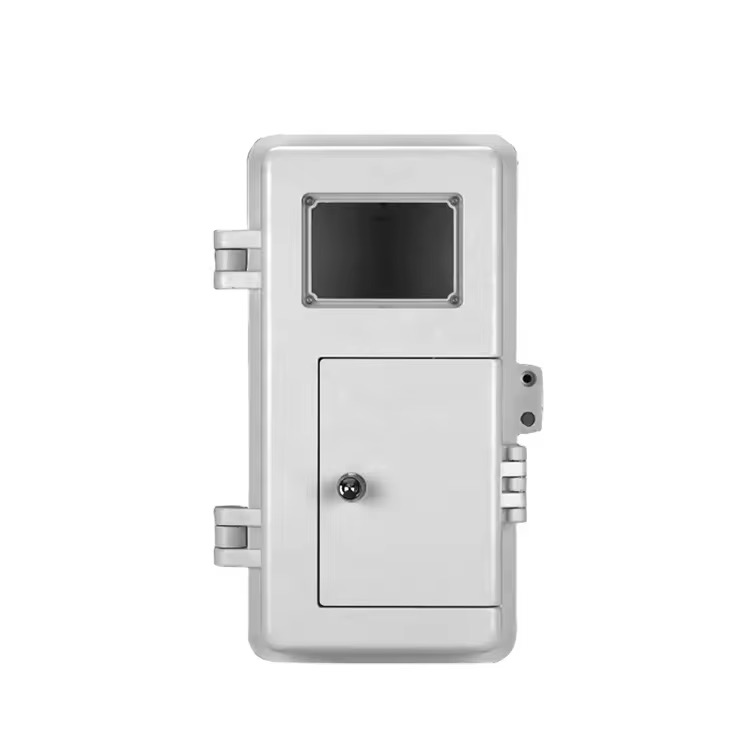
P111 Meter Box
The foreign trade meter box is a core terminal electrical distribution device designed for electric energy metering, power distribution and circuit protection, serving as a key connection between power supply departments and end users.
Description
Electricity meter boxes play an essential role in low-voltage power distribution systems. They provide a dedicated enclosure for electricity meters and associated electrical components, helping utilities, contractors, developers, and end users manage energy consumption while protecting metering equipment and electrical connections.
For international buyers, selecting the right electricity meter box involves more than choosing an enclosure based on size or appearance. Material durability, environmental protection, installation method, metering capacity, electrical configuration, and compliance with local regulations all influence the suitability of a product for a specific market.
As power infrastructure expands across residential, commercial, industrial, and municipal sectors, export-ready meter boxes must accommodate different grid configurations and installation conditions. Understanding the main product options can help importers, electrical contractors, and project procurement teams make more informed purchasing decisions.
1. What Is an Electricity Meter Box?
An electricity meter box is an enclosure designed to house an electricity meter and, depending on the configuration, related components such as circuit breakers, residual current protection devices, surge protective devices, and wiring terminals.
Its primary functions include providing a suitable mounting environment for metering equipment, organizing electrical connections, and helping protect internal components against environmental exposure and unauthorized access.
In a typical low-voltage distribution application, the meter box forms part of the connection between the incoming power supply and the user's electrical installation. The exact arrangement depends on local utility requirements, the number of users, the metering method, and the protective devices specified for the project.
For overseas projects, buyers should verify the enclosure design and internal component configuration against the applicable national electrical codes and utility installation requirements before placing an order.
2. How to Select the Right Meter Box Material
Material selection affects mechanical strength, corrosion resistance, insulation performance, weight, maintenance requirements, and service life. Three common options are metal, engineering plastic, and stainless steel.
Metal Meter Boxes: Steel and Galvanized Steel
Cold-rolled steel and galvanized steel are commonly considered for applications requiring a rigid enclosure. Steel provides good structural strength and resistance to routine mechanical impacts when appropriately designed.
Surface treatments such as electrostatic powder coating or galvanizing can help protect the enclosure against corrosion. The effectiveness of this protection depends on the coating system, material preparation, enclosure design, and exposure conditions.
Metal meter boxes may be suitable for residential distribution points, commercial buildings, industrial facilities, and outdoor installations when the selected model has appropriate weather protection and corrosion resistance.
Their electrical design should also incorporate suitable earthing arrangements, insulation barriers, and measures to reduce the risk of accidental contact with energized parts.
Plastic Meter Boxes: ABS and Polycarbonate
ABS and polycarbonate are widely used engineering plastics for electrical enclosures. Compared with many metal designs, plastic meter boxes can offer lower weight, convenient handling, and electrical insulation properties.
Their suitability depends on the specific material formulation and product construction. Buyers should verify flame-retardant performance, ultraviolet resistance, impact strength, operating temperature, and resistance to moisture and other environmental factors.
Where a UL 94 V-0 rating is specified, the classification should be confirmed for the actual material and applicable test conditions rather than assumed to apply to every plastic component or the complete assembled enclosure.
Plastic meter boxes may be considered for residential and other low-voltage installations where insulation, installation convenience, and resistance to corrosion are important selection factors.
Stainless Steel Meter Boxes: Grades 304 and 316
Stainless steel is often considered for installations exposed to demanding environmental conditions. Grade 304 may be suitable for many general-purpose applications, while grade 316 generally offers improved resistance to chloride-related corrosion.
This makes stainless steel worth evaluating for coastal installations, humid environments, and certain chemical-processing areas. However, the appropriate grade depends on the actual exposure conditions, including the presence of salt, chemicals, and cleaning agents.
Buyers should also consider fabrication quality, enclosure sealing, surface finish, fasteners, and maintenance requirements when assessing long-term corrosion performance.
3. Choose an Installation Method That Fits the Project
The installation method influences construction requirements, accessibility, appearance, and maintenance.
Wall-mounted meter boxes are fixed directly to a suitable wall or supporting structure. Their relatively straightforward installation makes them useful for individual homes, shops, small commercial premises, and other distribution points with available mounting space.
Flush-mounted meter boxes are installed within a wall, column, or prepared recess. They can provide a more integrated appearance and help save surface space. However, the installation requires appropriate recess dimensions, structural planning, and sufficient access for meter reading and maintenance.
Pole-mounted meter boxes are designed for installation on utility poles or other approved outdoor supports. They may be used in rural electrification, roadside distribution, and certain utility infrastructure projects. The mounting arrangement must account for mechanical loading, weather exposure, cable routing, and the requirements of the local electricity provider.
When comparing these options, project teams should confirm mounting dimensions, fixing points, cable-entry arrangements, service access, and the available space for internal components.
4. Determine the Required Metering Capacity
Metering capacity is another important consideration, particularly for residential developments and projects serving multiple users.
A single-user meter box is typically designed for an individual residence, small commercial property, or dedicated metering point.
Multi-user meter boxes can accommodate several metering circuits within a shared enclosure. Common configurations include 2, 4, 6, 8, 12, 18, and 24 metering positions, with other arrangements available through customization where the design permits.
Multi-user configurations can help organize metering equipment in apartment buildings, residential communities, industrial parks, and other developments with centralized distribution requirements.
The number of meter positions alone does not determine whether an enclosure is suitable. Buyers must also evaluate the incoming supply arrangement, rated current, conductor sizes, protective devices, internal clearances, heat dissipation, and access requirements.
For larger projects, providing the intended single-line diagram and metering schedule during the quotation stage can help suppliers determine the appropriate enclosure configuration.
5. Understand IP Ratings and Environmental Protection
Electricity meter boxes may be installed indoors, in sheltered outdoor locations, or in areas directly exposed to rain, dust, sunlight, and temperature fluctuations. The required enclosure protection should reflect the actual installation environment.
Commonly specified protection levels include IP44, IP54, IP65, and IP66. These ratings indicate different levels of protection against access to hazardous parts, solid foreign objects, and water under defined test conditions.
For example, IP44 provides protection against solid objects of the specified size and water splashing from different directions. IP65 and IP66 provide higher levels of dust protection and different levels of protection against water jets.
An IP rating does not automatically establish resistance to corrosion, ultraviolet radiation, impact, condensation, extreme temperatures, or every possible outdoor condition. These properties should be assessed separately.
For outdoor installations, buyers should review gasket materials, door seals, cable glands, drainage or condensation management, UV-resistant materials, and the enclosure's resistance to local weather conditions.
Where an application involves heavy rainfall, blowing dust, freezing temperatures, or intense sunlight, it is important to confirm that the complete enclosure assembly has been evaluated for the intended operating environment.
6. Check Electrical Ratings and Component Compatibility
Before purchasing a meter box for an overseas project, confirm the electrical requirements rather than relying on a general product specification.
Typical configuration options may include 110 V, 220 V, or 380 V AC systems and 50 Hz or 60 Hz operation. These figures represent possible design options, not a universal specification for every meter box. The actual rated voltage and frequency must match the intended power system and installed components.
Rated-current options may include 10 A, 16 A, 20 A, 32 A, 63 A, and 100 A. The correct rating depends on the load, circuit design, conductor capacity, protective devices, and applicable electrical regulations.
Depending on the project, the internal assembly may include:
-
Single-phase or three-phase electricity meters
-
Miniature circuit breakers or other appropriate circuit protection
-
Residual current circuit breakers or RCBOs where required
-
Surge protective devices
-
Contactors and terminal blocks
-
Copper terminals, insulated wiring, and cable glands
-
Mounting brackets, seals, and locking accessories
These components must be selected as a coordinated system. Their rated voltage, current, breaking capacity, wiring arrangement, and compatibility with the enclosure should be verified during the design stage.
7. What Export Buyers Should Know About Standards and Certification
Electrical requirements differ between countries and can vary by utility provider, installation type, and project specification. An enclosure that is suitable for one market may require changes before it can be accepted in another.
When reviewing supplier documentation, buyers should distinguish between material declarations, enclosure test reports, component certifications, and conformity assessments for the complete electrical assembly.
IEC 60439 is associated with an earlier generation of low-voltage switchgear and controlgear assembly standards. Depending on the product category and applicable requirements, the IEC 61439 series may be relevant to the design and verification of low-voltage switchgear and controlgear assemblies. A meter box enclosure by itself should not automatically be represented as compliant with either standard without supporting evidence.
Similarly, CE marking, RoHS, and REACH address different regulatory or substance-related requirements. Their applicability depends on the product, its components, and the destination market. National or regional requirements may also apply, including relevant US, UK, Australian, or New Zealand requirements.
For procurement teams, useful documents may include technical drawings, bills of materials, test reports, component datasheets, installation instructions, and applicable declarations of conformity.
A supplier should be able to clarify which requirements have been verified, which documents are available, and which additional tests or approvals are needed for the destination market.
8. Why Customization Matters for International Projects
Standard meter boxes may meet common requirements, but international projects often have different dimensions, mounting arrangements, metering layouts, and utility specifications.
Customization can cover several areas.
Structural design: Enclosure dimensions, mounting holes, door arrangements, cable entries, and internal module layouts can be adapted to project requirements.
Materials and finishes: Buyers can select an appropriate enclosure material, surface finish, color, and identification method based on environmental and branding requirements.
Metering configuration: Single-user or multi-user layouts can be designed around the specified number of meters, incoming supply, protective components, and available installation space.
Protection and security: Depending on the application, options may include improved sealing, suitable locking systems, protective covers, and additional environmental protection features.
Labels and documentation: Product labels, circuit identification, safety warnings, and nameplates can be prepared in English or another required language.
Packaging: Export packaging should be selected according to product weight, shipping method, handling conditions, and the risk of damage during transportation. Protective cartons, foam inserts, or suitable wooden packaging may be considered for larger or more fragile assemblies.
To reduce design revisions, buyers should provide destination-country requirements, installation drawings, electrical ratings, the intended number of metering positions, and any mandatory certification criteria as early as possible.
9. Quality Control and After-Sales Support
A meter box intended for export should undergo quality checks appropriate to its design and intended application.
At the material stage, inspection may cover dimensions, material identification, coating quality, and relevant material documentation. During production, checks can include enclosure dimensions, door alignment, fastening points, cable-entry features, and assembly quality.
For products supplied with electrical components, verification may also involve appropriate electrical safety tests and inspection of wiring, terminals, protective devices, and earthing arrangements. Water-ingress, dust-ingress, impact, temperature, and aging tests should be conducted where applicable to the specified product and performance claims.
Suppliers should explain the inspection plan and clarify whether testing is performed on individual units, representative samples, or defined production batches. These terms should not be treated as interchangeable.
For overseas buyers, after-sales support is also important. Useful services include English installation manuals, circuit diagrams, technical consultation, spare-part availability, warranty documentation, and assistance with export logistics.
Warranty duration and component coverage should be confirmed in the purchase agreement. For bulk orders, it is also advisable to agree on inspection criteria, packaging requirements, delivery schedules, and procedures for handling defective or damaged products.
10. Applications Across Different Industries
Export meter boxes are used in a broad range of low-voltage distribution applications, including:
-
Residential projects: Apartments, villas, housing developments, and rural homes.
-
Commercial buildings: Offices, shopping centers, hotels, supermarkets, and retail premises.
-
Industrial facilities: Factories, workshops, warehouses, and industrial parks.
-
Municipal infrastructure: Roads, public facilities, schools, hospitals, and parks.
-
New energy installations: Photovoltaic projects, EV charging infrastructure, and energy storage facilities, where the selected enclosure is suitable for the electrical design.
-
Utility and electrification projects: Rural power distribution, network upgrades, and metering infrastructure in developing and established markets.
Each application has different requirements for electrical capacity, enclosure protection, access control, environmental resistance, and maintenance. A specification developed for an indoor apartment building, for example, may not be appropriate for an exposed roadside installation.
Conclusion
Choosing an export-ready electricity meter box requires a balanced assessment of material properties, installation method, metering capacity, electrical ratings, environmental protection, regulatory requirements, and supplier support.
Metal, engineering plastic, and stainless steel each offer different advantages, while wall-mounted, flush-mounted, and pole-mounted designs serve different installation needs. The best choice depends on the destination market and the actual operating conditions rather than a single specification or advertised feature.
For importers, distributors, electrical contractors, and project developers, working with a supplier that can provide clear technical documentation, coordinated component options, suitable customization, and a defined quality-control process can make procurement more efficient and help reduce installation and compliance risks.



Reviews
There are no reviews yet.